10 Biggest Mistakes First-Time Home Builders Make (And How to Avoid Every Single One)
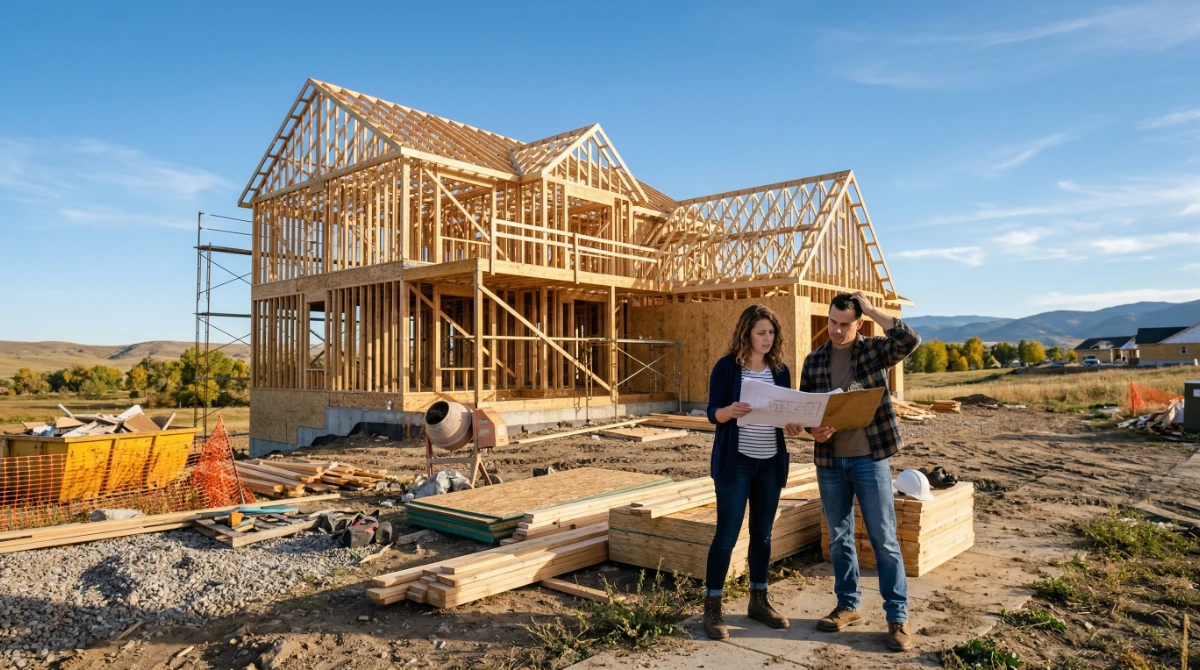
A couple I worked with last year came to me excited. They'd saved for years, found a builder, signed the contract, and broke ground on their dream home. Eight months later they were $67,000 over budget, three months behind schedule, and living in their in-laws' basement.
Nothing catastrophic went wrong. No foundation collapse. No contractor fraud. Just ten small, preventable mistakes that compounded into a financial nightmare.
After 15+ years of building custom homes, I've watched this pattern repeat hundreds of times. The mistakes are almost always the same. And they are almost always preventable.
Here are the 10 most expensive mistakes I see first-time builders make — ordered by build phase, with the real dollar cost and exactly how to prevent each one.
1
Setting Your Budget Based on the Builder's Quote Alone
Critical — exposure: $15K–$45K+
You get a builder quote for $350,000 and you budget $350,000. Then reality hits: the lot needs $8,000 in grading, the city charges $12,000 in impact fees, the driveway costs $7,000, landscaping runs $15,000, and window treatments add $4,000. None of these were in the builder's contract. Your real cost is $410,000.
| Hidden Cost | Typical Range |
|---|---|
| Permits & impact fees | $3,000 – $15,000 |
| Site prep & grading | $2,000 – $15,000 |
| Driveway & sidewalks | $3,000 – $12,000 |
| Landscaping & sod | $5,000 – $25,000 |
| Window treatments | $2,000 – $8,000 |
| Fence | $3,000 – $12,000 |
| Mailbox, final clean, survey, soil test | $1,500 – $4,000 |
| Temporary utilities during construction | $500 – $2,000 |
| Total hidden costs | $20,000 – $93,000 |
- Add a 20–25% buffer on top of the builder's contract price
- Request an itemized list of what IS and IS NOT included
- Get quotes for site prep, landscaping, and driveway before signing
- Use a budget tracker that accounts for every cost — not just construction
2
Signing a 20-Page Builder Contract You Didn't Fully Read
Critical — exposure: $10K–$100K+
You flip through the contract. Dense legal language. You sign because you trust the builder. Six months later you discover: the allowances are $40,000 below reality, there's no completion deadline, change orders carry a 25% markup, and you waived your right to sue.
- No guaranteed maximum price
- Unrealistic allowances ($8K for cabinets)
- No completion deadline penalty
- Builder-selected arbitration
- 25% change order markup
- GMP cap on total cost
- Showroom-verified allowances
- Liquidated damages for delays
- Mutual arbitration clause
- 15% markup matching market rate
- Read every page — highlight anything you don't understand
- Circle every allowance and compare to real showroom prices
- Verify the payment schedule ties to completed milestones
- Hire a construction attorney ($500–$1,000) to review before signing
For the 9 most dangerous clauses and exactly what to negotiate, read my builder contract red flags guide.
3
Hiring the First Builder Who Gives You a Good Price
Critical — exposure: $20K–$100K+
Builder A bids $340,000. Builder B bids $380,000. You hire Builder A because the price is lowest. What you didn't notice: Builder A has $22,000 in unrealistically low allowances, excludes site work, uses a cost-plus structure with no cap, and has 2 BBB complaints. The "cheapest" builder ends up costing $60,000 more than the "expensive" one.
| Line Item | Builder A (low bid) | Builder B (realistic bid) |
|---|---|---|
| Base contract | $340,000 | $380,000 |
| Allowance overages | +$35,000 | +$5,000 |
| Change orders (avg 7) | +$21,000 | +$4,000 |
| Delay costs (2 months) | +$12,000 | $0 |
| True total | $408,000 | $389,000 |
- At least 3 detailed bids with equalized allowances
- Active general contractor license in your state
- General liability insurance AND workers' comp (call the insurer directly)
- At least 5 references from projects completed in the last 2 years
- Walk through at least 2 completed homes they built
- Check BBB, Google reviews, and your state's licensing board
Use my 15 questions to ask your builder as your interview script — it covers every red flag.
Don't Interview a Builder Without This
The Home Building Checklist Bundle includes a 17-page Hiring Contractor Checklist with 100+ items to verify before signing — covering bids, contracts, payment schedules, references, insurance, and red flags. Plus 12+ phase-by-phase checklists and a budget tracker. $99.
See the Checklist Bundle
4
Approving a Floor Plan You've Only Seen on a Screen
High — exposure: $5K–$50K
The floor plan looked great on the architect's 27-inch monitor. Then you walked the framing. The master bedroom only fits the bed in one position. The hallway is 18 feet long, wasting 90 square feet. The pantry door hits the refrigerator. Every one of these is a $2,000–$8,000 change order during framing.
- Draw your actual furniture to scale on the plan (bed, dresser, couch, dining table)
- Check every door swing — does it hit anything when open?
- Walk the plan room by room: "Where does [item] go?"
- Verify the kitchen work triangle (sink–stove–fridge, 4–9 feet per leg)
- Learn how to read your home blueprints like a pro
For the 10 most expensive floor plan errors and how to catch every one, see my floor plan mistakes guide.
5
Saying "We'll Pick That Out Later" for Tile, Fixtures, and Appliances
Costly — exposure: $10K–$50K
The builder asks what appliances you want before they rough in the gas line. You haven't shopped yet. "We'll figure it out later." Later comes. You pick a 36-inch range but the rough-in was done for a 30-inch. The gas line is in the wrong spot. Change order: $3,500. Multiply this by every selection you deferred and you have $15,000–$40,000 in avoidable costs.
| Late Decision | Change Order Cost |
|---|---|
| Appliance dimensions change after rough-in | $1,500 – $5,000 |
| Tile selection changes after cement board | $2,000 – $6,000 |
| Cabinet layout changes after plumbing rough-in | $3,000 – $8,000 |
| Countertop material changes after cabinets | $1,500 – $5,000 |
| Light fixture changes after electrical rough-in | $500 – $2,000 |
| Total if you defer 3–5 selections | $8,500 – $26,000 |
- 7+ change orders
- $20K+ in unplanned costs
- 6+ weeks of delays
- Constant stress
- 0–1 change orders
- $0 in selection-related costs
- Zero delays
- Peace of mind
For the full breakdown on why change orders happen and how to prevent them, read my change order prevention guide.
6
Trusting Your Builder to Catch Everything During Framing
Critical — exposure: $5K–$30K
The builder calls and says framing is done. You drive by, take a few photos, and say "Looks great." You never walked inside. You never checked outlet locations, window heights, blocking for TV mounts, or pipe slopes. Three months later, after drywall, paint, and tile are done, you discover: no outlet behind the TV, the shower valve is on the wrong wall, and the kitchen island is 4 inches off-center. Every fix now requires cutting open finished walls.
| Issue | Fix During Framing | Fix After Drywall |
|---|---|---|
| Missing electrical outlet | $50 – $100 | $400 – $800 |
| Move a wall 6 inches | $200 – $500 | $3,000 – $8,000 |
| Add TV mount blocking | $20 – $50 | $300 – $600 |
| Move shower valve | $100 – $300 | $1,500 – $3,000 |
| Fix pipe slope | $150 – $400 | $2,000 – $5,000 |
| 5 typical issues | $520 – $1,350 | $7,200 – $17,400 |
- Schedule 2–3 hours minimum for your framing walk
- Bring your floor plan, tape measure, flashlight, and blue painter's tape
- Check every outlet, switch, pipe, and blocking location
- Photograph everything — especially plumbing and electrical rough-in
- Mark anything wrong with painter's tape and discuss before drywall
For a complete guide on what to check at every stage, read my phase-by-phase inspection guide.
Catch Every Mistake Before Drywall
The Home Building Checklist Bundle includes phase-specific checklists for Foundation, Framing, Plumbing, Electrical, HVAC, and more. Each one tells you exactly what to check and when — so nothing gets buried behind drywall. 12+ checklists, budget tracker, and materials list for $99.
Get the Complete Bundle
7
Falling in Love With a Lot Before Checking What's Underneath
High — exposure: $10K–$60K+
You found the perfect lot — beautiful views, nice neighborhood, great price. You buy it. Then the soil test comes back: expansive clay. The engineer requires over-excavation and pier foundations — $18,000 extra. The city requires a retaining wall because the lot slopes toward the neighbor: $12,000. The nearest sewer line is 200 feet away: $8,000 to connect. You spent $38,000 before a single wall went up.
| Lot Problem | Typical Added Cost |
|---|---|
| Poor soil / expansive clay (pier foundations) | $10,000 – $30,000 |
| Steep slope (retaining walls, grading) | $8,000 – $25,000 |
| No sewer connection (septic or long lateral) | $5,000 – $20,000 |
| Flood zone (elevation requirements) | $10,000 – $40,000 |
| Rock removal for foundation | $5,000 – $15,000 |
- Get a geotechnical soil report ($800–$2,000) before closing on the lot
- Check flood zone maps (FEMA) and drainage patterns
- Verify utility availability: water, sewer, gas, electric, internet
- Review setback requirements, easements, and HOA restrictions
- Ask the city about impact fees, connection fees, and permit costs
For a complete lot evaluation framework with a scoring system, read how to choose the right lot for your custom home.
8
Expecting Your Home to Be Done in 6 Months
Costly — exposure: $3K–$7K per month
Your builder said "10–12 months." You sold your house with a 10-month closing. You moved into a rental with a 10-month lease. Month 10 arrives and you're at drywall, not move-in. You're paying $3,500/month in rent, $250/month for storage, and $2,000/month in construction loan interest. Every extra month costs $5,750 you didn't budget for.
- Add 3–4 months to whatever timeline the builder quotes
- Budget $3,000–$7,000/month in carrying costs (rent, storage, loan interest)
- Don't sell your current home until you have a certificate of occupancy
- Include a liquidated damages clause for builder-caused delays
9
Spending $15K on a Steam Shower and Skipping the Electrical Panel Upgrade
Costly — exposure: $8K–$30K wasted
You spend $6,000 on a steam shower (used 3 times), $4,000 on a pot filler (looks great in photos, never used), and $5,000 on a built-in wine cooler. Meanwhile, you went with builder-grade electrical panel (no room for future circuits), builder-grade insulation (higher energy bills for 30 years), and skipped the rough-in for the future basement bathroom ($500 during construction vs. $8,000 later).
- Steam shower — $5K–$8K
- Pot filler faucet — $800–$1,500
- Ornamental columns — $2K–$5K
- Jetted tub — $3K–$6K
- Electrical panel upgrade — $500–$1,000
- Extra insulation — $1K–$3K
- Pre-wire for future tech — $300–$800
- Rough-in future bath — $500–$1,500
- Prioritize infrastructure upgrades (electrical, insulation, plumbing rough-ins) over cosmetic features
- Ask yourself: "Will I use this weekly, monthly, or never?"
- Pre-wire and pre-plumb for anything you might want in 5 years
For a complete breakdown of what's worth upgrading and what's a waste, read my builder grade vs. custom guide.
10
Managing a $400K Project With Text Messages and a Notebook
High — exposure: $10K–$40K cumulative
You approved a change order over text. You discussed outlet placement verbally. Your builder says you agreed to the substituted flooring material "last Tuesday." You have no record. No photos of the rough-in. No written confirmation of selections. You manage a $400,000 project the way you manage a grocery list — and it costs you accordingly.
- Written confirmation of every decision (email, not text)
- Photos at every stage — especially before drywall
- A budget tracker updated weekly (not monthly, not "at the end")
- Phase-by-phase checklists for every inspection and walkthrough
- A folder with every invoice, lien waiver, and change order
- A selections tracker with model numbers, colors, and costs
Build Your Home Without the $80K in Mistakes
The Home Building Checklist Bundle gives you 12+ detailed checklists covering every phase of construction — Hiring Contractor (17 pages), Homesite Selection (16 pages), Foundation, Framing, Plumbing, HVAC, Electrical, Kitchen, Bathroom, Interior, Garage, Blue Tape Walkthrough, plus a Budget Tracker and Materials List. 15 years of field experience in one download. $99.
Get the Complete BundleWhat These 10 Mistakes Can Cost You
| Mistake | Cost Exposure |
|---|---|
| 1. Not budgeting for hidden costs | $15,000 – $45,000 |
| 2. Signing the contract blind | $10,000 – $100,000+ |
| 3. Hiring the wrong builder | $20,000 – $100,000+ |
| 4. Not reviewing the floor plan | $5,000 – $50,000 |
| 5. Making selections too late | $10,000 – $50,000 |
| 6. Skipping the framing walk | $5,000 – $30,000 |
| 7. Buying the wrong lot | $10,000 – $60,000 |
| 8. Not understanding the timeline | $3,000 – $7,000/month |
| 9. Wrong upgrades | $8,000 – $30,000 |
| 10. No tracking system | $10,000 – $40,000 |
| Total potential exposure | $96,000 – $512,000+ |
Final Thoughts
These aren't theoretical risks. Every mistake on this list happens on real job sites, to real first-time builders, every single week. I've watched it unfold hundreds of times.
But here's the pattern I've also noticed: the common thread between builders who avoid these mistakes isn't a bigger budget or a better contractor. It's preparation. They show up with questions, checklists, and a system. And that single difference saves them tens of thousands of dollars.
If you're planning to build, start with the basics: understand the complete home building timeline, learn how to avoid construction delays, and if you're building in Texas, check the real cost to build a home in Texas in 2026.
Spending a few hours reviewing checklists before you break ground is the highest-ROI activity of your entire build. The cheapest change in construction is always the one you make on paper.