How to Choose the Right Lot for Your Custom Home
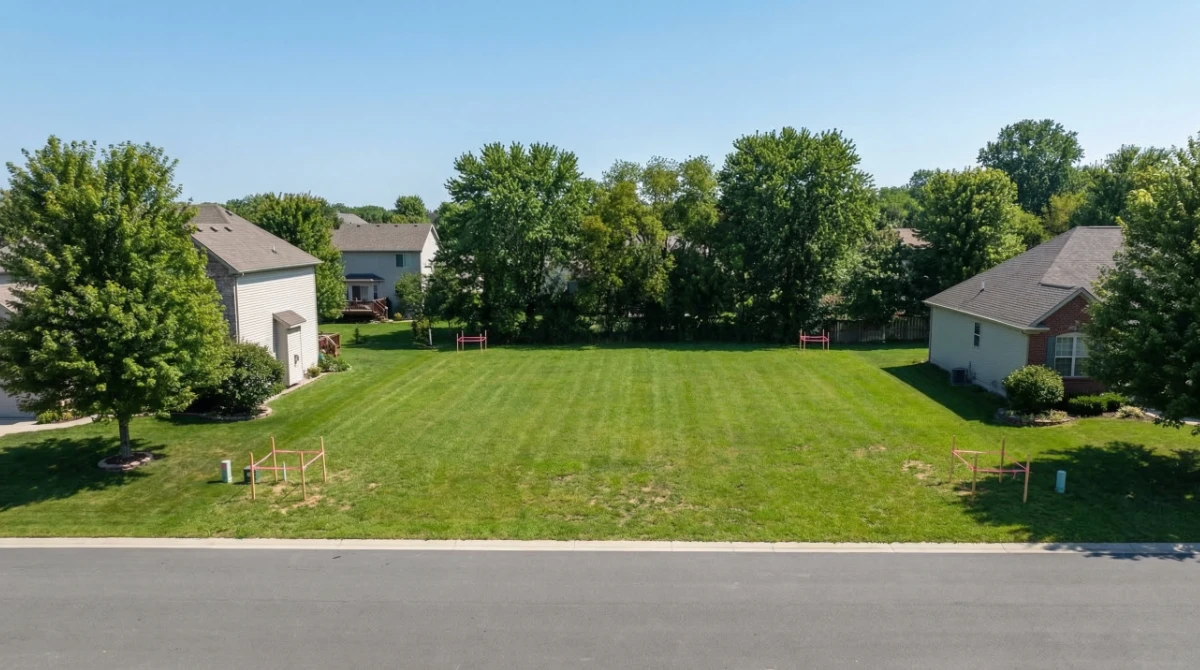
You found a lot. The listing says "build-ready." The price is in budget. The neighborhood looks perfect. So you write the check, close on the land, and hand the plans to your builder.
Then the soil test comes back: clay. The septic engineer says you need an engineered system. The utility company quotes $18,000 to run water to the property line. And the county tells you the setbacks eat 40% of your buildable area.
Your $80,000 lot just became a $130,000 lot - and you haven't poured a single footing yet.
I've been building custom homes for over 15 years, and I've watched homeowners lose tens of thousands of dollars on lots that looked perfect on Zillow. The lot is the foundation of your entire project. Get it wrong, and every decision after it is compromised.
The cheapest lot isn't the one with the lowest price tag. It's the one with the fewest hidden costs.
The 8 Factors That Actually Determine Whether a Lot Is Worth Buying
Forget "location, location, location" for a minute. Before you evaluate the neighborhood, you need to evaluate the dirt. Here are the 8 factors that separate a great lot from a money pit.
1
Soil Composition & Bearing Capacity
Deal-breaker potential
Soil is the single most important factor that nobody talks about in real estate listings. The type of soil on your lot determines your foundation type, your drainage strategy, your septic options, and potentially whether you can build at all.
| Soil type | What it means for your build | Cost impact |
|---|---|---|
| Sandy loam | Ideal. Drains well, stable, easy to excavate. | Standard foundation cost |
| Sandy | Drains fast. May need compaction for bearing capacity. | +$2,000-$5,000 |
| Clay | Expands when wet, shrinks when dry. Moves your foundation. | +$8,000-$25,000 |
| High water table | Water at or near the surface. Limits basement options. | +$10,000-$30,000 |
| Rock / ledge | Expensive to excavate. May need blasting. | +$15,000-$50,000+ |
| Fill / organic | Unstable. May need to be removed and replaced entirely. | +$20,000-$60,000+ |
- Get a geotechnical soil test ($1,500-$3,000) - this is non-negotiable
- Ask for the perc test results if the lot requires a septic system
- Check the USDA soil survey for the area (free) for a preliminary look
- Ask neighbors what foundation type they built on
- Seller refuses to allow soil testing before purchase
- Lot was previously a pond, creek bed, or landfill
- Standing water visible on the lot, even after dry weather
- Cracks in the ground surface during dry periods (indicates expansive clay)
I've seen homeowners skip the $1,500 soil test to "save money" and then spend $40,000 on an engineered foundation because the soil couldn't support a standard footing. The soil test is the cheapest insurance you'll ever buy. If a seller won't let you test before closing, walk away. There's a reason they don't want you digging.
2
Utility Access & Connection Costs
Deal-breaker potential
"Utilities available" on a listing doesn't mean "utilities at the lot line." It often means the water main is 500 feet down the road and the electric transformer is across the street. The cost to connect those utilities to your lot? That's on you.
| Utility | If at the lot line | If NOT at the lot line |
|---|---|---|
| Water | $2,000-$5,000 tap fee | $5,000-$25,000+ (line extension) |
| Sewer | $3,000-$8,000 tap fee | $8,000-$50,000+ (or requires septic) |
| Electric | $1,000-$3,000 service drop | $5,000-$20,000+ (transformer/pole install) |
| Gas | $500-$2,000 | $3,000-$15,000+ (or propane tank instead) |
| Septic system | $8,000-$12,000 conventional; $25,000-$40,000 engineered | |
| Well | $5,000-$15,000 depending on depth | |
- Call every utility provider and get written quotes for connection to your specific lot
- Ask specifically: "Is the main/line at the lot line, or will I need an extension?"
- Check for impact fees - some municipalities charge $15,000-$50,000 on top of tap fees
- Verify internet/fiber availability - this affects resale value significantly
Utility costs are the #1 budget surprise I see on rural and semi-rural lots. A homeowner bought a beautiful 3-acre lot for $60,000 - great deal. Then the utility quotes came in: $22,000 for water line extension, $35,000 for an engineered septic system, $8,000 for electric service. The "cheap" lot cost $125,000 before a single wall went up. Always get utility quotes before you close.
3
Zoning, Setbacks & Buildable Area
Deal-breaker potential
Your lot is 100 x 150 feet. That's 15,000 square feet, right? In theory. In practice, setbacks, easements, and buffers can shrink your buildable area dramatically.
Setbacks are the required distances from your house to each property line. A typical suburban lot might have 25-foot front, 30-foot rear, and 10-foot side setbacks. On a 100x150 lot, that leaves you a buildable rectangle of just 80 x 95 feet - about half the total lot area.
Lot looks like this
100 x 150 ft = 15,000 sq ft total.
"Plenty of room for a 2,500 sq ft house."
No mention of setbacks, easements, or buffers in the listing.
Lot actually builds like this
Setbacks remove 25 ft front, 30 ft rear, 10 ft each side.
Drainage easement takes 15 ft along the left side.
Buildable footprint: 65 x 95 ft - your 2,500 sq ft house barely fits.
- Get the zoning designation from the county and look up setback requirements
- Request a plat or survey showing easements, buffers, and right-of-ways
- Draw your intended house footprint inside the buildable envelope
- Check height restrictions - some zones limit building to 35 feet
- Verify HOA restrictions on top of zoning (minimum square footage, style, materials)
Easements don't show up in lot dimensions. A 20-foot utility easement along the back of the lot means you can't build anything - not even a shed - in that 20-foot strip. Drainage easements, access easements, and conservation buffers can further reduce your buildable area. Always get a survey before buying, not after.
4
Drainage, Grading & Topography
Budget impact: $3,000-$30,000+
Water is the number one enemy of any home. Where water goes on your lot determines everything: foundation type, basement feasibility, driveway grade, landscaping costs, and long-term maintenance.
- Visit the lot during or right after heavy rain - watch where water flows and pools
- Check FEMA flood maps for flood zone designation
- Look at neighboring lots - if their yards drain toward your lot, you'll get their water
- Ask a grading contractor to walk the lot and estimate site work costs
The most deceptive lot is a flat lot in a low area. It looks perfect - no grading needed, easy build. Then spring comes, the water table rises, and the basement floods. Or the lot is the low point in the subdivision and every neighbor's runoff heads your way. Flat doesn't mean dry. Visit the lot after rain. Every time. No exceptions.
Don't Miss What the Listing Won't Tell You
The Home Building Checklist Bundle includes a 16-page Homesite Selection Checklist with 100+ items to evaluate before buying your lot - soil, utilities, zoning, drainage, and every hidden cost.
See the Checklist Bundle
5
Lot Orientation & Sun Exposure
Livability & energy cost impact
Which direction your lot faces determines where the sun hits your house all day, every day, for the life of the home. This affects energy costs, room comfort, outdoor living, and even curb appeal.
| Front of house faces | Backyard gets | Ideal for |
|---|---|---|
| North | South sun (best for outdoor living) | Patio/deck use, passive solar, garden |
| South | North shade (cool but dark yard) | Hot climates, minimal yard use |
| East | West sun (hot afternoon backyard) | Morning people, shade trees on west |
| West | East sun (gentle morning backyard) | Evening outdoor entertaining |
In most climates, a lot where the backyard faces south is ideal. You get a sun-filled backyard for outdoor living, and you can position living rooms with south-facing windows for natural daylight and passive solar gain in winter. The front of the house faces north - less sun glare, fewer fading issues with the facade. It's not always possible, but if you're choosing between two lots, orientation should be a deciding factor. For more on how sun affects room layout, read my article on floor plan mistakes.
6
Road Access, Traffic & Neighbors
Long-term livability impact
A beautiful lot on a busy road is a noisy lot. A private lot down a quarter-mile gravel road means snow plowing is your problem. The access to your lot and what surrounds it will affect your daily life for decades.
- Road type: Paved public road (best), paved private road (HOA maintains), gravel (you may maintain), no road (you build one - $20K-$80K+)
- Traffic volume: Visit at rush hour, school dismissal, and weekends. Busy roads = noise + difficult turns
- Neighbors: What's next to and behind the lot? Farmland? Commercial? Future development?
- Emergency services: How far is the nearest fire station? Response time affects insurance rates
- School district: Even if you don't have kids - this heavily affects resale value
- Lot requires an easement across another property to access the road
- Nearest neighbor has junk cars, dogs, or commercial activity on their property
- Vacant land adjacent that's zoned commercial or industrial
- No cell service on the lot
Here's one most people miss: check the county's future land use map. That peaceful farmland behind your lot? It might be designated for a future subdivision, shopping center, or highway. Counties plan 10-20 years ahead, and those plans are public record. A 5-minute check now prevents a nasty surprise when bulldozers show up 3 years after you move in.
7
Trees, Clearing & Environmental Restrictions
Budget impact: $5,000-$40,000+
A wooded lot is beautiful. It's also expensive to prepare. Every mature tree that needs to come down costs $500-$2,000 to remove. A densely wooded 1-acre lot might need $15,000-$40,000 in clearing before you even start grading.
And here's the catch: some of those trees might be protected. Many municipalities have tree preservation ordinances that restrict which trees you can remove, require replacement plantings, or charge mitigation fees.
- Count the trees that would need removal for the house footprint, driveway, and septic field
- Get a clearing estimate from a land clearing contractor
- Check for tree preservation ordinances in your municipality
- Look for wetlands, streams, or buffers that restrict clearing
- Check for endangered species habitats (yes, this can halt construction)
Don't clear everything. Mature trees increase property value by 10-20% and provide natural shade that cuts cooling costs. Work with your architect to position the house footprint around key trees. The goal is clearing what you must and keeping what's valuable - especially large oaks, maples, and other hardwoods that take 30+ years to grow.
8
Title, Liens & Legal Restrictions
Must verify - non-negotiable
Before you sign anything, the legal side must be airtight. A clean title, no outstanding liens, no deed restrictions that prevent your intended use, and no boundary disputes.
- Title search: Confirms the seller actually owns the property and there are no liens
- Survey: Confirms boundaries, shows easements, encroachments, and setback lines
- Deed restrictions: Some deeds limit what you can build (style, size, materials, outbuildings)
- HOA covenants: Read every page. They may restrict exterior colors, fence types, satellite dishes, even landscaping
- Permits: Verify the lot is actually zoned for residential construction (not all vacant land is)
- Seller can't provide a recent survey
- Tax liens or mechanic's liens on the property
- Boundary line disagreements with neighbors
- Lot has been for sale for years with no buyers (usually means a hidden issue)
I always tell homeowners: buy the survey before you buy the lot. A boundary survey costs $400-$800 and tells you exactly what you're buying. I've seen lots where the "property line" the seller pointed out was 15 feet off from the actual boundary. That's 15 feet of buildable area you're paying for but don't own. Never rely on fence lines, tree lines, or "well, my neighbor says..."
The True Cost of Your Lot: What the Listing Price Doesn't Include
The listing price is just the beginning. Here's what your lot will actually cost once you add the site work that most buyers forget to budget:
| Cost item | Range | Notes |
|---|---|---|
| Lot purchase price | Varies | The number you see in the listing |
| Closing costs on land | $2,000-$5,000 | Title insurance, recording fees, attorney |
| Soil / geotechnical test | $1,500-$3,000 | Should be done BEFORE closing |
| Survey | $400-$1,500 | Boundary + topographic |
| Clearing & tree removal | $5,000-$40,000 | $500-$2,000 per mature tree |
| Grading & site prep | $3,000-$30,000 | Slope lots cost significantly more |
| Utility connections | $5,000-$50,000+ | Water, sewer, electric, gas |
| Impact / tap fees | $5,000-$50,000 | Charged by municipality; varies widely |
| Septic system (if no sewer) | $8,000-$40,000 | Conventional vs. engineered |
| Well (if no municipal water) | $5,000-$15,000 | Depth varies by region |
| Driveway | $3,000-$15,000 | Longer driveways = more cost |
| Retaining walls (if needed) | $5,000-$30,000+ | Required on sloped lots |
| Total hidden costs | $15,000-$200,000+ | On top of the lot purchase price |
When comparing two lots, don't compare listing prices. Compare total ready-to-build costs. A $120,000 lot with utilities at the lot line, good soil, and flat grade might be cheaper than a $60,000 lot that needs $80,000 in site work. Do the full math before you commit.
Evaluating a Building Lot?
The Homesite Selection Checklist in the Home Building Checklist Bundle covers 100+ items across budget, location, site characteristics, legal, infrastructure, and environmental factors - so you don't miss a thing.
Get the Checklist BundleHow to Compare Lots: The Scorecard Method
When you're deciding between two or three lots, emotion takes over. One has a better view, another has mature trees, the third is closer to town. Use this simple scoring method to make the decision objective:
Soil & Drainage
Good soil, no flood zone, positive drainage away from build site
Utility Access
All utilities at lot line with reasonable connection costs
Buildable Area
Setbacks and easements leave enough room for your floor plan
Topography
Flat to gentle slope, minimal grading and no retaining walls needed
Orientation
Good sun exposure for living spaces and backyard
Location & Access
Paved road, good school district, reasonable commute, cell service
Clearing Cost
Minimal tree removal needed; no wetland or environmental issues
Legal & Title
Clean title, no restrictive covenants, no boundary disputes
Score each lot from 1 to 10 in each category. Any lot that scores below 5 in Soil, Utilities, or Legal is a deal-breaker regardless of total score. A lot scoring 60+ out of 80 is strong. Below 50? Walk away unless the price compensates heavily for the weak areas.
Your Lot Visit Checklist: What to Do on-Site
Don't just drive by the lot. Walk it. Bring a tape measure, a compass app on your phone, and a notepad. Here's your on-site checklist:
- Walk every boundary line. Look for survey stakes (iron pins in the ground). Note any fences, walls, or structures that cross the boundary.
- Check for standing water. Look for puddles, muddy patches, or areas where grass grows taller (indicating subsurface moisture). Visit after rain if possible.
- Identify the slope. Stand where the house would sit and look in every direction. Does water flow away from you or toward you?
- Note the sun. Use a compass app to find north. Where will the sun rise and set relative to your intended backyard?
- Count the trees. How many mature trees are in the house footprint area? Count them - each one is $500-$2,000 to remove.
- Check cell service. Call someone. Stream a video. If it doesn't work now, it won't work after construction.
- Listen. Stand quietly for 5 minutes. Can you hear highway traffic? Dogs? Industrial noise? Train tracks? These are permanent.
- Look at the neighbors. What's behind you? Next to you? Across the street? What could be built on that vacant lot next door?
- Find the utilities. Look for water meters, utility poles, fire hydrants, and manhole covers near the lot. Their distance from the lot = your connection cost.
- Take photos and video. Document everything. You'll need them when comparing lots later or discussing with your builder.
I tell every client: visit the lot at three different times. Morning, evening, and after a rainstorm. Morning shows you the sun exposure. Evening shows you the noise level when neighbors are home. After rain shows you the drainage. A lot that passes all three visits is a lot you can build on with confidence.
5 Lot-Buying Mistakes That Cost Thousands
What buyers do
1. Skip the soil test to "save $1,500."
2. Trust the listing when it says "utilities available."
3. Assume all buildable area = lot size.
4. Buy without visiting after rain.
5. Don't check the county's future land use map.
What smart buyers do
1. Get a geotechnical report before closing. ($1,500 prevents $40K surprises.)
2. Call every utility provider for written connection quotes.
3. Get a survey showing setbacks, easements, and buildable envelope.
4. Visit the lot during and after heavy rain.
5. Check the future land use map at the county planning office.
Build With Confidence From Day One
The Home Building Checklist Bundle includes 12+ detailed checklists covering every stage of construction, a budget tracker, and a materials list - 15 years of field experience in one download.
Get the Complete BundleFinal Thoughts
Choosing a lot is the first major decision of your build - and the one with the least room for error. You can redesign a floor plan. You can change materials. You can switch contractors. But you can't change the dirt your house sits on.
The listing price is never the true cost. Soil, utilities, drainage, setbacks, clearing, and legal fees can add $15,000 to $200,000 to a lot's real price tag. The only way to know the true cost is to investigate before you close.
A $1,500 soil test, a $400 survey, and a few phone calls to utility companies can save you more money than any other single thing you do during your entire build.
For what comes after you buy the lot, read my complete home building timeline to understand what happens at each stage. And when it's time to hire your builder, make sure you know the 15 questions to ask before signing the contract.