15 Questions to Ask Your Builder Before You Sign the Contract
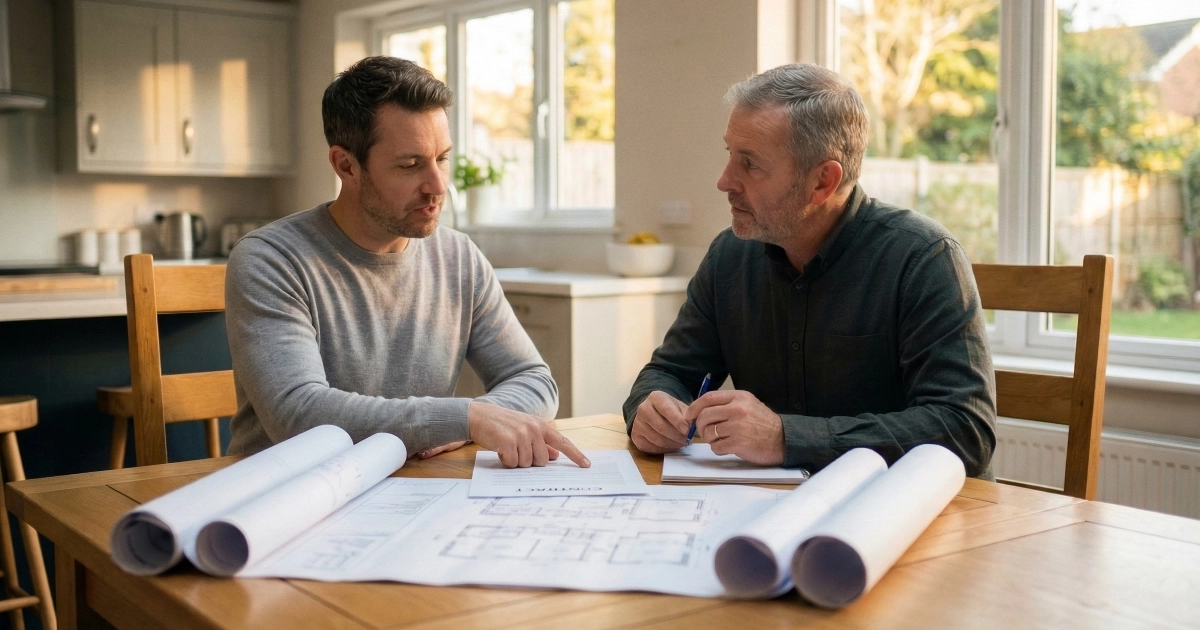
I've watched homeowners sign $400,000 building contracts in under ten minutes. No questions asked. No clauses read. Just a handshake, a signature, and a whole lot of hope.
Then, four months into the build, the phone calls start. "He's charging me $6,000 for something I thought was included." Or: "He says the delay isn't his fault and I can't do anything about it." Or the worst one: "I can't even fire him without paying a $25,000 penalty."
Every one of those situations could have been prevented with the right questions before the contract was signed.
This isn't a checklist you skim and forget. Each question below is a lens into how your builder operates, how they handle problems, and whether your money is actually protected. I'm going to show you what good answers look like, what bad answers look like, and what the contract language should actually say.
Let's make sure you're not one of them.
The contract isn't a formality. It's the only thing standing between you and a six-figure misunderstanding.
How to Use This Guide
I've organized these 15 questions into four categories. Click any question to expand the full breakdown - including red flags, green flags, real contract clause examples, and insider context that most homeowners never hear.
Each question has a risk tag. Deal-breaker means: if the builder can't answer this well, do not sign. High-risk means it can cost you five figures if overlooked. Important means it affects your experience but may not sink the project.
This is where most contract disputes start - and where they cost the most. The questions below will tell you exactly how your money is being handled and whether the financial risk is shared fairly.
1
Is this a fixed-price contract, cost-plus, or something else?
Deal-breaker
This is the single most important question you can ask. It determines who carries the financial risk - you or the builder.
Fixed-price means the builder quotes a total number and absorbs any cost overruns. Cost-plus means you pay actual costs plus a percentage markup (typically 10-20%), which means the builder has zero incentive to control costs. Some builders use hybrids - a "guaranteed maximum price" with shared savings.
- "It's cost-plus but don't worry, I'm always close to my estimates"
- Vague about which model they use
- No cap on cost-plus
- Clear explanation of the pricing model with written examples
- Fixed-price with defined allowances
- Cost-plus with a guaranteed maximum
Here's what builders won't tell you: cost-plus is almost always better for the builder. They make more money when the project costs more. That doesn't make them dishonest - but it removes the financial incentive to stay on budget. If you go cost-plus, insist on a GMP (guaranteed maximum price) and the right to audit every invoice.
2
What exactly is included in the price - and what isn't?
Deal-breaker
This is where the $27,000 surprise comes from. The quote says "$350,000" and the homeowner assumes that means everything. It doesn't.
Common items that are NOT included in many builder contracts (but homeowners assume they are):
| Often excluded item | Typical cost | Surprise factor |
|---|---|---|
| Landscaping & grading | $5,000 - $25,000 | Very common |
| Driveway & walkways | $3,000 - $12,000 | Very common |
| Permits & impact fees | $2,000 - $15,000 | Common |
| Utility connections | $3,000 - $10,000 | Common |
| Window blinds & treatments | $2,000 - $8,000 | Very common |
| Appliances | $5,000 - $20,000 | Sometimes |
| Finish upgrades above allowance | $5,000 - $30,000+ | Almost always |
- "Everything's included" with no detailed spec sheet
- No written list of exclusions
- Allowances aren't itemized
- Detailed scope of work (10+ pages)
- Every allowance listed with dollar amounts
- Clear exclusions section
I've seen builders quote $280,000 when a comparable builder quotes $330,000. The first builder wasn't cheaper - they just excluded $50,000 worth of work that the second builder included. Always compare apples to apples. Demand a scope of work detailed enough that a stranger could build your house from it.
For a deeper look at exclusions and hidden costs, read my full article on the hidden costs of building a custom home.
3
What's the payment schedule, and is it tied to completed milestones?
Deal-breaker
Never pay ahead of work completed. This is the number one rule that protects you from a builder who takes the money and disappears, slows down, or goes bankrupt mid-project.
A fair payment schedule ties every payment to a specific, verifiable construction milestone:
If a builder asks for 50% upfront, walk away. If they ask for any payment before a milestone is completed and verified, push back. The builder should always be slightly behind on payments - meaning you owe money for work that's already done, not the other way around.
4
How are change orders handled, and what do they cost?
High risk
Change orders are where builders make their real money. You will make changes during your build - everyone does. The question is whether those changes cost you $500 or $5,000 each time.
A change order is any modification to the original scope of work. Moving a wall, upgrading a fixture, adding an outlet. Some builders charge a flat admin fee per change order (reasonable). Others charge a markup percentage on top of the actual cost (less reasonable if it's high).
How bad builders handle it
"We'll figure it out as we go."
"The markup is whatever the sub charges plus our fee."
No written change order process. Verbal agreements only. You find out the cost after the work is done.
How good builders handle it
"Here's our change order form. Every change gets priced in writing before we do the work."
"Our markup on change orders is 15%, same as the original contract."
Written approval required. No work starts until you sign.
Some builders deliberately underprice the initial contract knowing they'll make it back on change orders. Low bid, high change order markup. This is especially common with production builders. Always ask: "What was your average change order total on your last five projects?" A honest builder will tell you.
Want a Full Contractor Hiring Checklist?
The Home Building Checklist Bundle includes a 17-page Hiring Contractor Checklist with 100+ items - covering insurance verification, interview questions, bid analysis, contract terms, red flags, and more.
See the Checklist BundleTime is money in construction - literally. Every week of delay costs you in extended rent, storage fees, loan interest, and stress. These questions reveal how your builder manages time and keeps you informed.
5
What's the realistic timeline, and what's built into it for weather and delays?
High risk
Every builder will give you a timeline. Good builders give you a realistic one with contingency built in. Bad builders tell you what you want to hear.
A typical custom home takes 7 to 14 months depending on size and complexity. If someone promises you a 2,500 sq ft custom home in 4 months, they're either lying or cutting corners.
- Timeline that sounds too good to be true
- "We'll get it done as fast as possible"
- No written schedule with phase milestones
- Specific phase-by-phase schedule with dates
- 2-4 weeks of weather contingency included
- "Realistically, plan for 10-12 months"
Ask the builder: "What was the longest delay on your last three projects, and what caused it?" If they say "we never have delays," they're not being honest. Every project hits snags. Good builders anticipate them. Great builders have a plan for when they happen.
For strategies to keep your build on track, check out my article on how to avoid new home building delays.
6
What happens financially if the project runs past the agreed deadline?
Deal-breaker
Here's the question that separates serious builders from the rest. If there's no consequence for delays, there's no incentive to finish on time.
The standard mechanism is called liquidated damages - a pre-agreed daily or weekly penalty for delays that are the builder's fault (not weather, not your changes, not material shortages).
| Your delay costs | Per month | 3-month delay total |
|---|---|---|
| Extended rent / temporary housing | $1,500 - $3,000 | $4,500 - $9,000 |
| Construction loan interest | $800 - $2,500 | $2,400 - $7,500 |
| Storage unit for furniture | $150 - $400 | $450 - $1,200 |
| Stress, disruption, time off work | Priceless | Priceless |
| Total financial impact | $2,450 - $5,900 | $7,350 - $17,700 |
Many builders will resist liquidated damages. That itself tells you something. A builder who's confident in their schedule won't worry about a delay penalty. If they refuse entirely, ask for a compromise: no penalty for the first 30 days of delay, then $200/day after that. It's reasonable, and it shows they take deadlines seriously.
7
Who is my daily point of contact, and will I ever deal with someone else?
Important
You signed the contract with the company owner. But who's actually running your project day to day? On many builds, the owner is managing 5+ projects simultaneously, and you'll be talking to a project manager or superintendent you've never met.
That's not necessarily bad - but you should know it going in.
- "You can reach out to whoever's on site"
- No named contact person
- You're told to call the office and "someone will get back to you"
- "Your project manager will be [Name]. Here's their direct number"
- You meet the PM before signing
- Backup contact if PM is unavailable
The quality of your project manager matters more than you think. A great PM can save a mediocre builder's reputation. A bad PM can ruin a great builder's project. If possible, ask to speak with a homeowner whose project was managed by the same PM. Their experience is what yours will look like.
8
How often will I get updates, and in what format?
Important
"We'll keep you posted" is not a communication plan. You need to know exactly when and how you'll hear about progress, problems, and decisions.
Vague communication
"I'll call you when there's something to report."
"Just stop by the site whenever you want."
You find out about problems when you drive past the site and notice nothing has changed in three weeks.
Structured communication
"Weekly email every Friday with photos, progress summary, and upcoming schedule."
"Monthly in-person walkthrough at a scheduled time."
You get a project management app login with real-time photo updates.
The builders who communicate well are almost always the builders who build well. It's not a coincidence. Organization in communication reflects organization on the job site. If a builder can't commit to a weekly email, imagine how they manage 14 subcontractors.
A contract can be perfectly priced and on schedule - and still deliver a poorly built home. These questions dig into the builder's quality standards, who actually does the work, and what happens when something fails after you move in.
9
What warranty do you offer, and what does it actually cover?
Deal-breaker
Most states require a minimum warranty on new construction, but the minimums are often pathetically short. A builder who stands behind their work will offer more than the legal minimum.
Here's what a strong warranty structure typically looks like:
- "We offer the standard warranty" (with no specifics)
- Warranty excludes "normal settling" without defining what that means
- No written warranty document
- Detailed warranty booklet with specific coverage periods
- 30-day, 6-month, and 11-month warranty walkthroughs included
- Third-party warranty backed by an insurance company
The 11-month warranty walkthrough is the most underused protection homeowners have. Most builder warranties are 1 year on workmanship. At the 11-month mark, do a thorough walkthrough and submit every issue in writing before the warranty expires. Builders expect this from informed homeowners.
10
Who are your subcontractors, and how long have you worked with them?
High risk
Your builder doesn't build your house. Subcontractors do. The foundation crew, the framers, the plumber, the electrician, the HVAC team, the drywall crew, the painters, the roofer - these are all separate companies hired by your builder.
The quality of those subcontractors is the quality of your home.
- "We use whoever's available"
- Won't share subcontractor names
- Uses the cheapest bid every time
- High subcontractor turnover
- "Our electrician has done every project with us for 8 years"
- Willing to share sub names and license numbers
- Long-term relationships with core trade partners
- Verifies sub insurance and licensing
A builder's relationship with their subs tells you everything. Long-term relationships mean the builder pays fair, manages well, and maintains standards. Constant turnover means the builder is difficult to work with, slow to pay, or cuts corners. Subs talk - the good ones choose which builders they want to work with.
11
Can I visit the construction site during the build?
High risk
This question isn't about whether you're allowed. It's about whether the builder is comfortable with it. And their comfort level tells you a lot about how they operate.
Restrictive builders
"You can visit, but only with me present."
"We prefer you don't come during work hours."
"It's a liability issue - we can't have you on site."
Transparent builders
"Come by any time. Just wear closed-toe shoes and a hard hat."
"We'll schedule walkthroughs at every major milestone."
"Take as many photos as you want."
There's a legitimate safety reason to have some site rules. A construction site is dangerous. But a builder who actively discourages site visits is a builder who doesn't want you to see how the sausage gets made. Transparency builds trust. If they won't let you watch the work, ask yourself why.
For a complete list of what to check during site visits, see my guide on what to inspect at every stage of building your home.
12
Do you hire independent inspectors, or do you only rely on city inspections?
Important
City inspections are the bare minimum. They verify code compliance - not quality. A city inspector spends 15 to 30 minutes on site. They're checking boxes, not evaluating craftsmanship.
An independent third-party inspector works for you. They spend 2 to 4 hours on site and check for things the city inspector doesn't: material quality, workmanship standards, design compliance, energy efficiency, and more.
- "City inspections cover everything"
- Builder discourages hiring your own inspector
- "We've never had a homeowner need an inspector"
- "We encourage you to hire your own inspector"
- Builder recommends specific independent inspectors
- Builder does their own internal quality checks
A third-party inspection at the pre-drywall stage costs $400 to $600. It's the single best $500 you can spend during your entire build. The inspector will catch things you'd never notice and things the city inspector doesn't check. Many problems can only be spotted at this stage - once drywall goes up, it's too late.
Building Your First Home?
The Home Building Checklist Bundle walks you through every phase of construction - 12+ detailed checklists, a budget tracker, and a materials list template. 15 years of field experience in one download.
Get the Checklist BundleNobody wants to think about lawsuits during the exciting phase of building a home. But these legal questions are your last line of defense if something goes wrong - and they cost you nothing to ask upfront.
13
Are you licensed, insured, and bonded? Can I see the certificates?
Deal-breaker
This seems obvious, but you'd be shocked how many homeowners never actually verify this. Asking isn't enough - you need to see the documents and verify them independently.
What you need to verify:
- General contractor license - active and in good standing with the state licensing board
- General liability insurance - minimum $1M, covers property damage and injuries on your property
- Workers' compensation insurance - covers workers injured on your job site (if they don't have this, you could be liable)
- Builder's risk insurance - covers damage to the structure during construction (fire, storm, theft)
If a worker is injured on your property and the builder doesn't have workers' compensation insurance, you can be sued personally. This isn't hypothetical - it happens regularly. Call the insurance company listed on the certificate and verify it's active. Policies can be canceled the day after a certificate is issued.
Ask for a copy of the certificates and call the insurer directly to verify they're current. Also ask the builder to add you as an "additional insured" on their general liability policy. This costs the builder nothing and gives you direct protection. A builder who refuses this is a builder you shouldn't hire.
If you're considering being your own general contractor to manage these relationships directly, read my Texas owner-builder guide.
14
How do we resolve disputes - mediation, arbitration, or court?
High risk
Nobody signs a contract expecting a lawsuit. But contracts exist precisely for when things go wrong. The dispute resolution clause determines how you fight, how much it costs, and who has the advantage.
| Method | Cost to you | Timeline | Who benefits |
|---|---|---|---|
| Mediation | $2,000 - $5,000 | 1-3 months | Both parties |
| Arbitration | $5,000 - $20,000 | 3-6 months | Depends on arbitrator |
| Litigation (court) | $15,000 - $100,000+ | 1-3+ years | Who can afford it longer |
- Contract requires binding arbitration only (removes your right to sue)
- Builder chooses the arbitrator
- No dispute resolution clause at all
- Mediation required first, then arbitration or litigation
- Both parties agree on the mediator/arbitrator
- Costs shared equally
15
What does the termination clause say, and what does it cost me to walk away?
Deal-breaker
This is the question no one wants to ask - because asking it feels like you're already planning to fail. But the termination clause is arguably the most important section of your entire contract.
If the relationship goes sideways - and sometimes it does - you need to know what it costs to end it. I've seen homeowners trapped in terrible builder relationships because the termination clause would cost them $30,000 to $50,000 on top of paying a new builder to finish.
- Termination requires paying for all projected profit (the builder's total expected margin)
- No termination for cause (builder performance issues)
- "Termination fee equal to 20% of the remaining contract value"
- Termination for cause: builder defaults are clearly defined
- Termination for convenience: pay for work completed + reasonable costs
- 15-30 day notice period with opportunity to cure defects
A client of mine discovered their builder was using cheaper materials than specified in the contract. When they confronted the builder, the relationship collapsed. The termination clause in their contract required them to pay the builder's full projected profit on the entire remaining work - $42,000 - just to fire him. They ended up negotiating a settlement, but it cost them $18,000 and three months of zero progress. The right termination clause would have made this a $0 problem.
Both sides should have termination rights. The builder needs protection too - if you stop paying or make unreasonable demands, they need an exit. A fair contract gives both parties defined exit paths with clear financial consequences. If only one side can terminate easily, the contract is one-sided.
Score Your Builder: The 15-Question Test
After asking all 15 questions, rate your builder's answers. Give 1 point for every question where you got a clear, specific, written answer that matched the "green flag" examples above. Give 0 points for vague, evasive, or concerning answers.
Your builder's score
The Bonus Question Nobody Asks (But Should)
After you've asked all 15 questions, ask one more:
"Can I talk to your last three clients - not the ones you choose, but literally your last three projects?"
Most builders will hand you a curated reference list of their happiest clients. That's useless. You want to talk to the most recent clients - the ones whose experience is freshest and whose projects reflect the builder's current team, pricing, and process.
If the builder won't provide this, ask yourself what they're hiding.
Before You Sign: Final Checklist
Before you put pen to paper, make sure you can check every one of these boxes:
- The scope of work is detailed - every material, every finish, every allowance is specified in writing
- The price is clear - you know exactly what you're paying and what's not included
- The timeline is realistic - with milestones, contingency, and consequences for delays
- Change orders are defined - written process, stated markup, approval required before work begins
- Payments are tied to milestones - you never pay ahead of completed work
- The warranty is specific - coverage periods, exclusions, and walkthrough schedule in writing
- Insurance is verified - you've called the insurer and confirmed active coverage
- Dispute resolution is fair - mediation first, costs shared, not one-sided
- Termination is defined - for cause and for convenience, with fair financial terms
- You've talked to recent clients - not curated references, but actual recent homeowners
Have a real estate attorney review your contract before you sign. Yes, it costs $500 to $1,000. But attorneys catch things you won't - and they've seen thousands of builder contracts. One clause they catch can save you $20,000. This is not the place to save money.
Ready to Vet Your Builder Like a Pro?
The Home Building Checklist Bundle includes a 17-page Hiring Contractor Checklist, phase-by-phase inspection guides, a budget tracker, and 12+ checklists covering every stage of your build.
Get the Complete BundleFinal Thoughts
Signing a builder contract is one of the biggest financial commitments you'll make in your life. It deserves more than 10 minutes of review and a "looks good to me."
The builders who answer these 15 questions clearly and confidently are the builders worth hiring. The ones who get defensive, vague, or dismissive are showing you exactly how they'll behave when problems arise during your build.
The contract sets the rules for the next 8 to 14 months of your life. Make sure those rules protect you.
Ask the hard questions now so you don't have to ask them in front of a mediator later.
For more on managing your build from day one, read my guide on what nobody tells first-time builders about the first 30 days. And if you're trying to understand what a fair price looks like, check out my breakdown of how much it costs to build a house per square foot in 2026.