How Much Does It Cost to Build a Garage in 2026?
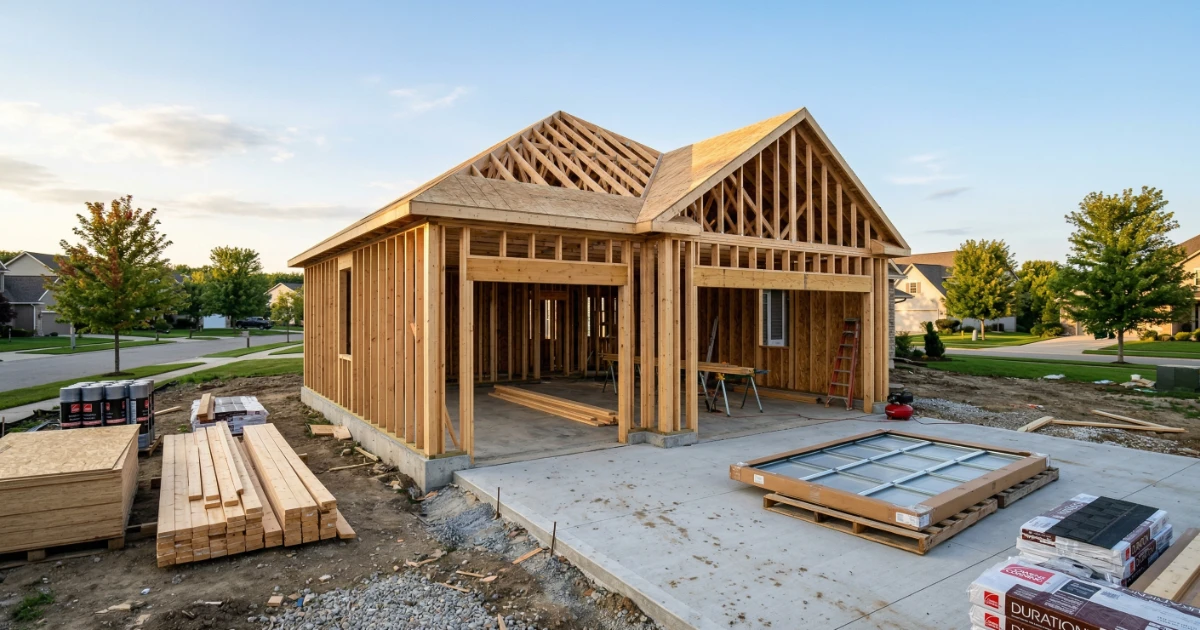
The short answer: a basic attached single-car garage costs $15,000-$25,000. A detached two-car garage with finished interior runs $40,000-$80,000+. And a fully finished three-car garage with a workshop can hit $100,000-$150,000.
The real answer is more complicated. Garage costs depend on whether it is attached or detached, what you put under it (slab vs stem wall), what goes inside it (bare studs vs insulated and finished), and what your local permit office has to say about it.
I have built garages ranging from $12,000 basic carports to $140,000 detached workshops. Here is what drives the cost and what you should actually budget.
Garage Cost by Type and Size
Here is what you should realistically expect in 2026, based on actual builds - not online calculators that were last updated in 2019:
1-Car Attached Garage (12x20 ft / 240 sq ft)
The most affordable option. Shares a wall with the house, so you save on one wall of framing, siding, and foundation. Basic slab, standard garage door, drywall on shared wall (fire code), bare studs on the other three. No insulation, no heating, no finished floor. This is "park the car and close the door" territory.
2-Car Attached Garage (24x24 ft / 576 sq ft)
The standard for most new construction homes. Includes a 16-ft double garage door or two single doors, a thicker slab (6 inches for heavier vehicles), and usually code-required fire-rated drywall on the house-side wall. At the higher end, you are looking at insulated walls, a finished ceiling, and better lighting. This is the most common garage built in the US.
3-Car Attached Garage (36x24 ft / 864 sq ft)
The third bay is where most people put a workbench, storage, or a second fridge. The slab cost jumps because you are pouring a significantly larger area. The roofline gets more complex (tying a wider garage roof into the house). If your lot has a side-load option, expect the driveway cost to increase too. Worth it if you actually need the space - not worth it as "someday" storage.
2-Car Detached Garage (24x24 ft / 576 sq ft)
All four walls, its own roof, its own foundation, its own electrical panel. You are building a small standalone building. The foundation is the biggest cost jump compared to attached - you need footings on all four sides instead of sharing the house foundation. The upside: no fire code restrictions, easier to insulate and heat, and you can put a workshop or hobby space in here without worrying about noise or fumes reaching the house.
Detached Garage with Living Space Above (24x30+ ft)
This is a real building project. The foundation needs to support a second floor. The framing is structural, not just wall framing. You need stairs, plumbing (if adding a bathroom), HVAC, insulation, drywall, flooring, and a separate electrical sub-panel. Permits are more complex because many jurisdictions treat this as an accessory dwelling unit (ADU) with its own code requirements. Budget accordingly - this is not a garage with a bonus room, it is a small building that happens to have a garage on the ground floor.
Cost Breakdown: Where Does the Money Actually Go?
Here is the breakdown for a typical 2-car attached garage (24x24 ft, $40,000 mid-range build):
| Item | % of Total | Cost Range |
|---|---|---|
| Foundation / Slab | 20-25% | $6,000 - $14,000 |
| Framing (walls, trusses, roof sheathing) | 20-25% | $6,000 - $12,000 |
| Roofing (shingles, underlayment, flashing) | 10-12% | $3,500 - $7,000 |
| Garage Door(s) | 8-15% | $1,500 - $6,000 |
| Electrical (lights, outlets, sub-panel) | 8-12% | $2,000 - $5,000 |
| Siding / Exterior Finish | 8-10% | $2,500 - $6,000 |
| Drywall / Interior Finish | 5-8% | $1,500 - $4,000 |
| Insulation | 3-5% | $800 - $2,500 |
| Permits, Design, Engineering | 3-5% | $800 - $3,000 |
| Concrete Driveway / Apron | 5-10% | $2,000 - $5,000 |
| Total | 100% | $30,000 - $55,000 |
Attached vs Detached: The Real Cost Difference
A detached garage costs 30-50% more than an attached garage of the same size. Here is why:
Detached (costs more)
Full foundation on all four sides.
Four complete exterior walls with siding.
Standalone roof structure.
Separate electrical run from house panel (trenching + conduit).
Separate concrete path or driveway connection.
Attached (costs less)
Shares one wall and part of the foundation with the house.
Three exterior walls instead of four.
Roof ties into existing house roofline.
Electrical runs from house panel through shared wall.
Driveway already connects to the house.
If you want a workshop with noise and fumes, need an ADU above it, have a lot layout that does not support attached, or your HOA requires detached. The cost premium pays for flexibility and separation.
The Costs Nobody Mentions
The numbers above are construction costs. Here is what gets added on top and catches people off guard:
Varies wildly by city. Some rural counties need nothing. Cities like Austin can charge $2,000+ for a garage permit plus plan review fees.
If your lot slopes toward the house, you need grading to keep water out of the garage. French drains or regrading add up fast.
If there is a gas line, sewer line, or electrical line running where your garage slab goes, it has to move. You pay for it.
Some HOAs require architectural review, material matching, and setback compliance. Resubmitting revised plans after a rejection costs time and money.
If the garage is detached or further from the street, you need more concrete. Budget $8-$12 per sq ft for a standard 4-inch concrete driveway.
Your garage siding, trim, and roof should match your house. If your house has stone accents or custom paint, matching the garage adds a premium over basic vinyl or hardie board.
Upgrades Worth Considering (and What They Cost)
A garage is one of the few spaces where upgrades can actually pay for themselves in either function or resale value. Here are the ones I recommend:
$300-$800 more than a standard non-insulated door. If your garage shares a wall with the house, this is not optional - an uninsulated garage door turns the whole garage into a heat sink that makes your HVAC work harder. R-16 or higher.
$1,500-$3,500 for a professional 2-car garage coating. DIY kits are $300-$600 but peel within 2 years if the slab is not properly prepped. This protects the slab from oil stains, salt damage, and makes cleanup effortless. Wait 30 days after the slab is poured before applying.
$200-$500 during construction ($800-$1,500 after). If you own or might own an EV, run a 240V 50-amp circuit to the garage now. Running it during construction is cheap. Running it after drywall is expensive. Same applies if you want a welder, table saw, or air compressor. This is one of those decisions you cannot undo after framing.
$150-$300 per outlet during construction. Most builders install the bare minimum - one outlet and one light. If you will use the garage for anything beyond parking, add outlets every 6 feet along the walls and LED shop lights on the ceiling. Adding them after drywall costs 3-5x more.
$1,500-$4,000 for a 2-car garage. Unnecessary if you just park cars. Essential if you work in the garage, store temperature-sensitive items, or if the garage shares a wall with living space. R-13 walls and R-30 ceiling is the sweet spot.
$300-$800 during rough-in, $1,500-$3,000 after. Having water in the garage is one of those things you do not think about until you need it. Running a water line during construction is trivial. Running it after the slab is poured means cutting concrete.
"The cheapest time to add anything to a garage is while it is being built. Every upgrade costs 3-5x more as a retrofit."
Garage Cost by Region
Labor is the biggest regional variable. Materials are roughly the same everywhere, but what you pay your framer, electrician, and concrete crew varies significantly:
| Region | Cost per Sq Ft | 2-Car Garage (576 sq ft) |
|---|---|---|
| South (TX, FL, GA, NC, SC) | $45 - $90 | $26,000 - $52,000 |
| Midwest (OH, IN, MI, MO) | $40 - $85 | $23,000 - $49,000 |
| Northeast (NY, NJ, PA, MA) | $60 - $120 | $35,000 - $69,000 |
| West (CA, CO, WA, OR) | $70 - $140 | $40,000 - $81,000 |
| Rural (any state) | $35 - $70 | $20,000 - $40,000 |
If you are building in Texas, the South pricing applies for most metro areas. Rural builds trend lower but you may pay a travel premium if your contractor is driving 45+ minutes to reach the site.
Should You Build It Now or Add It Later?
If you are building a new home and debating whether to include the garage in the original build or add it later, the math is simple: build it now.
When your contractor is already on site with equipment, crew, and open permits, adding a garage is efficient. Coming back 2 years later means a new permit, new mobilization costs, new concrete crew, and working around your finished landscaping. A $40,000 garage during construction becomes a $55,000-$60,000 garage as a standalone project.
The only exception: if budget is genuinely tight and you cannot build the garage without cutting corners on the house itself. In that case, pour the slab and run the electrical conduit now (this costs $8,000-$12,000), and frame the garage later. The slab and conduit are the expensive parts to retrofit.
How to Avoid Overpaying for Your Garage
Garage bids vary more than house bids because many contractors treat garages as simple projects and price them loosely. I have seen $15,000 spreads between bids for the same 2-car attached garage. Make sure every bid includes the same scope - slab, framing, roofing, door, electrical, drywall, and exterior finish.
The most common exclusions in garage bids: permits, driveway or apron, interior finish, insulation, and garage door opener. A $30,000 bid that excludes these is really a $38,000-$42,000 project. Read about hidden costs that catch homeowners off guard.
A 4-inch slab is fine for parking cars. If you will work in the garage or store heavy equipment, go 6 inches with fiber mesh or rebar. A cracked slab costs $5,000-$15,000 to repair. The upgrade from 4 to 6 inches costs $1,000-$2,000 during construction.
Same siding, same roof shingles, same trim color. A garage that does not match the house drags down the look of the entire property and can reduce resale value. This is not the place to save $2,000.
Your city or HOA has setback requirements - how far the garage must sit from property lines, the street, and the house. I have seen homeowners design their dream detached garage only to find out it violates a 10-foot side setback. Check first, design second.
The Bottom Line
A garage is a straightforward project compared to building a house, but the costs add up faster than people expect. Budget $30,000-$55,000 for a standard 2-car attached garage, $40,000-$80,000 for detached, and add 15-20% for upgrades and the hidden costs that every online calculator leaves out.
The biggest mistake is not the garage itself - it is not planning for it properly. Missing outlets, a too-thin slab, no insulation, and a cheap garage door are the kind of decisions that cost $500 to get right during construction and $5,000 to fix later. These details are exactly the kind of thing a good conversation with your builder and a proper checklist catch before they become problems.
Building a Garage? Do Not Skip the Details.
The Home Building Checklist includes a dedicated Garage and Driveway section - covering slab thickness, electrical, insulation, door specs, and everything else that gets missed when people treat the garage as an afterthought.
Get the Checklist