The Complete Home Building Timeline: What to Expect Month by Month
Every builder will hand you a timeline. It'll look clean, organized, and completely reasonable. Then month four hits, and suddenly you're three weeks behind, your cabinet selections were due last Tuesday, and nobody told you the HVAC sub is booked until next month.
I've built custom homes for over 15 years. I've never - not once - seen a build go exactly as scheduled. But I've seen dozens of homeowners who were prepared for what actually happens, and their builds ran smoother, cheaper, and with far less stress than the ones who went in blind.
This is the timeline your builder won't give you. Not because they're hiding it - but because the real timeline includes the decisions you need to make, the delays you should expect, and the money that moves at each stage.
Below is a month-by-month breakdown of what actually happens during a custom home build. Click each month to see the full details - activities, decisions you need to make, where delays happen, and how the budget flows.
The Big Picture: Where Time and Money Go
Before we dive into the month-by-month details, here's how a typical 10-month custom home build breaks down by phase:
And here's where the money typically flows for a $350,000 build:
| Phase | % of budget | Approx. cost ($350K build) |
|---|---|---|
| Site work & foundation | 12-15% | $42,000 - $52,500 |
| Framing & roofing | 18-22% | $63,000 - $77,000 |
| Plumbing, electrical, HVAC | 15-18% | $52,500 - $63,000 |
| Exterior (siding, windows, doors) | 10-14% | $35,000 - $49,000 |
| Interior finishes | 25-30% | $87,500 - $105,000 |
| Landscaping & final site work | 3-5% | $10,500 - $17,500 |
| Total | 100% | $350,000 |
Now let's break this down month by month.
Visual Timeline Overview
Here's the full build at a glance. Each bar represents work happening during that month. Notice how phases overlap - your build doesn't move in clean, isolated steps.
| Phase | M1 | M2 | M3 | M4 | M5 | M6 | M7 | M8 | M9 | M10 |
|---|---|---|---|---|---|---|---|---|---|---|
| Site & Foundation | ||||||||||
| Framing & Roof | ||||||||||
| MEP Rough-In | ||||||||||
| Exterior Envelope | ||||||||||
| Insulation & Drywall | ||||||||||
| Interior Finishes | ||||||||||
| Punch List & Close |
Month-by-Month Breakdown
Month 1
Site Prep, Excavation & Foundation
This is where your build gets real. The lot transforms from a piece of land into a construction site. It's exciting - and it's the phase most vulnerable to weather delays.
What's happening on site
- Utility locating and temporary power/water setup
- Lot clearing, tree removal, rough grading
- Surveyor stakes the house footprint
- Excavation for foundation (footings, basement, or slab)
- Rebar and forms installed, inspected
- Concrete pour for footings and foundation walls
- Foundation waterproofing and drain tile installation
- Backfill around foundation
- Final confirmation of house placement on the lot
- Foundation type locked in (slab, crawl space, full basement)
- Any last-minute plan changes before framing begins
You can't pour concrete in standing water. You can't excavate mud. Two weeks of heavy rain at this stage can push your entire timeline back by a month. Builders know this - it's why smart ones build 2-3 weeks of weather buffer into the early schedule.
Visit the site the day before the concrete pour. Verify the footings match the plans, check rebar spacing, and make sure there's no standing water in the trench. This is a 15-minute visit that protects against $20,000+ in foundation problems. Once concrete is poured, there's no going back.
Month 2-3
Framing: The Skeleton of Your Home
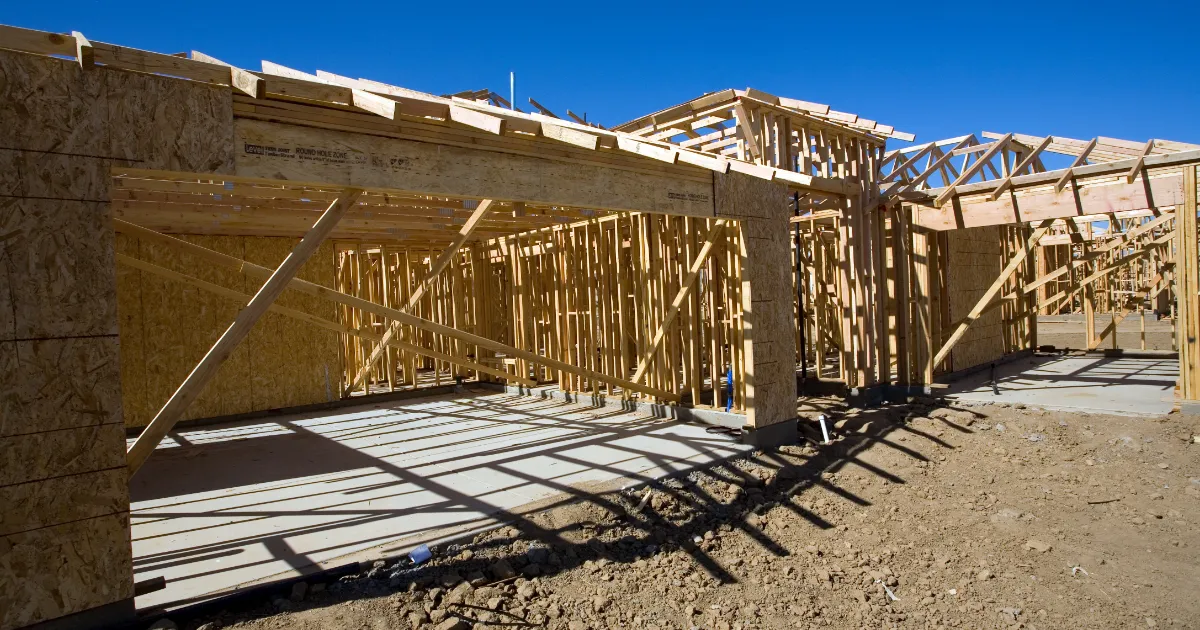
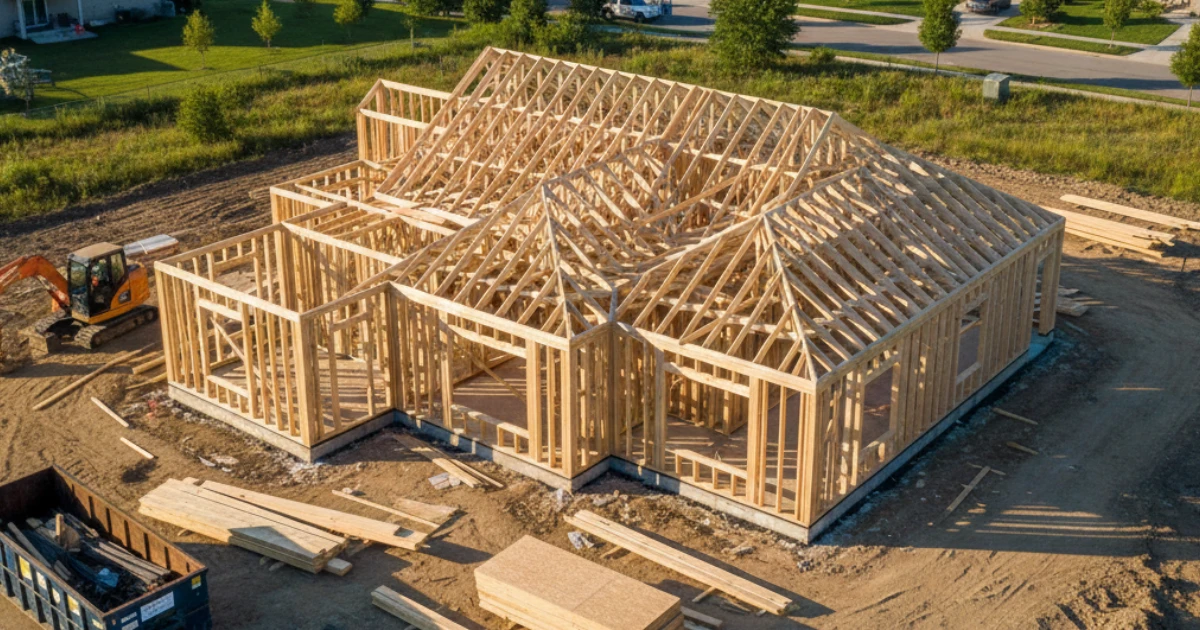
Framing is when your home goes from a concrete slab to something that actually looks like a house. In two to four weeks, walls go up, the roof structure is built, and you can walk through rooms for the first time. It's the most visually dramatic phase of the entire build.
What's happening on site
- Sill plates anchored to foundation
- Floor system installed (joists, subfloor)
- Exterior and interior wall framing
- Window and door rough openings cut
- Roof trusses or rafters set
- Roof sheathing and underlayment
- Sheathing on exterior walls
- Framing inspection by city
- Windows and exterior doors - order now, they take 4-8 weeks to arrive
- Roofing material and color - roofer will want to start as soon as sheathing is done
- Electrical layout - outlet locations, light switch placement, smart home wiring
- Plumbing fixture locations - tub/shower position, kitchen sink placement
Once framing is complete and inspected, moving a wall costs $2,000 to $5,000 or more. Right now, it costs the price of a few 2x4s and an hour of labor. Walk every room during framing. Compare it to the blueprints. Stand where your bed will go. Open imaginary doors. Check closet depths. This is when you catch the $200 problems - not the $5,000 ones.
Rain during framing is one of the most common homeowner panic moments. Some moisture on framing lumber is normal and will dry. But if the subfloor sits in standing water for days, or if wet insulation gets trapped inside walls, you have a real problem. For guidance on when to worry and when to relax, read my full article on wet framing.
Month 4-5
Mechanical Rough-In & Exterior Envelope
This is the most chaotic phase of your build. Plumbers, electricians, and HVAC techs are all working in the same space, routing pipes, pulling wire, and installing ductwork through the same stud bays. Meanwhile, the exterior crew is hanging siding, installing windows, and sealing the house from weather.
It's also your last chance to see behind the walls.
What's happening on site
- Plumbing rough-in (supply lines, drain lines, vent stacks)
- Electrical rough-in (wiring, boxes, panel)
- HVAC rough-in (ductwork, refrigerant lines, vents)
- Windows and exterior doors installed
- House wrap / weather barrier applied
- Siding or exterior cladding begins
- Low-voltage wiring (ethernet, speakers, security, EV charger)
- MEP inspections by city
- Cabinet layout finalized - cabinets take 6-10 weeks to build/ship
- Countertop material selected - templating happens after cabinets install
- Tile selections for all bathrooms and kitchen - tile needs to be on site before drywall is done
- Light fixtures chosen - electrician needs to know rough-in requirements now
- Appliance models confirmed - cabinet and countertop cutouts depend on exact dimensions
I can't stress this enough. The most common delay from month 4 onward isn't weather, materials, or subcontractor scheduling. It's homeowners who haven't finalized their selections. If your cabinets aren't ordered by now, you'll add 6-10 weeks to the back end of your build. That's $8,400 to $14,000 in delay costs.
Schedule a walkthrough right before insulation goes in. This is your absolute last chance to verify outlet locations, light switch placement, and plumbing positions. Bring a piece of blue tape and mark every spot where you want an outlet, then compare it to the electrical plan. I've seen homeowners save $3,000 in post-drywall electrical changes from a single 30-minute walkthrough. For a complete list of what to check, see my phase-by-phase inspection guide.
Tracking 12+ Construction Phases?
The Home Building Checklist Bundle gives you phase-by-phase checklists for every stage covered in this timeline - plus a budget tracker and materials list to keep everything organized.
See the Checklist Bundle
Month 5-6
Insulation, Drywall & The Walls Close In
After insulation inspection, the drywall crew moves in and your open-framed house transforms into something that looks like an actual home. Rooms have walls, ceilings exist, and the space suddenly feels smaller than you imagined (that's normal - furniture and paint fix it).
What's happening on site
- Insulation installed in all exterior walls, attic, and rim joists
- Insulation inspection by city
- Drywall hung on all walls and ceilings
- Drywall mudding, taping, and sanding (2-3 coats)
- Primer coat on all drywall surfaces
- Garage drywall and firewall completion
What you'll feel
"These rooms look tiny. Did the builder frame it wrong?"
"The drywall seams are visible - is this normal?"
"Nothing has happened for days. Are they even working?"
What's actually happening
Rooms always look smaller without trim, paint, and flooring. That's completely normal.
Seams disappear after final sanding and paint. Check with angled light after primer.
Mud coats need 24+ hours to dry between applications. Three coats = 3+ days of "nothing."
The drywall phase is when homeowner anxiety peaks. You'll visit the site and think something's wrong because the walls have visible seams, the rooms feel cramped, and progress seems to have stalled. Relax. Drywall mudding takes time - each coat dries for 24 hours, then gets sanded and re-coated. After paint, those seams vanish. If you want to check quality, bring a flashlight and shine it at a low angle along the walls after the final sanding coat. Any bumps or ridges will show up as shadows.
Month 6-8
Interior Finishes: Where the Money (and Decisions) Really Flow
This is the longest, most expensive, and most emotionally exhausting phase of your build. Every day brings new decisions and new opportunities to blow the budget. Cabinets, countertops, tile, flooring, paint colors, light fixtures, hardware, mirrors, shelving - it all happens here.
It's also where change orders hit hardest. You see the tile in person and decide to upgrade. The countertop edge you picked doesn't look right. You want one more recessed light in the kitchen. Each change adds $500 to $3,000.
What's happening on site
- Interior paint (walls, ceilings, trim - usually 2 coats)
- Cabinets installed (kitchen, bathrooms, laundry)
- Countertop template, fabrication, and installation
- Tile installation (floors, showers, backsplash)
- Hardwood / LVP / carpet flooring installed
- Trim work (baseboards, crown molding, door casing, window trim)
- Interior doors hung and hardware installed
- Light fixtures, outlets, and switch plates installed
- Plumbing fixtures (sinks, faucets, toilets, shower heads)
- Mirrors, towel bars, accessories
- Appliance delivery and installation
The Selection Timeline You Need to Know
These aren't "nice to have by" dates. These are order deadlines. If you miss them, the item won't arrive when the installer is ready, and your timeline slips.
| Selection | Lead time | Must order by |
|---|---|---|
| Cabinets (custom) | 6-10 weeks | Month 3-4 |
| Cabinets (semi-custom/stock) | 2-4 weeks | Month 4-5 |
| Countertops (granite/quartz) | 2-3 weeks after template | Month 5-6 |
| Tile (specialty/imported) | 4-8 weeks | Month 3-4 |
| Hardwood flooring | 2-4 weeks | Month 5-6 |
| Light fixtures | 1-6 weeks | Month 4-5 |
| Appliances | 2-8 weeks | Month 4-5 |
| Interior doors (custom) | 4-6 weeks | Month 4-5 |
A homeowner I worked with didn't finalize their cabinet selection until month 5. Custom cabinets took 8 weeks to arrive. The countertop couldn't be templated until cabinets were installed. The tile setter, flooring crew, and trim carpenter all had to be rescheduled. The cascading delay added 7 weeks and over $12,000 in carrying costs. All because of one late decision.
For a deeper look at why finish material pricing varies so much, read my article on why offers for railings, staircases, and countertops are usually so wide.
Month 9
Exterior Completion & Systems Testing
The end is in sight. The interior is 90% done, and the focus shifts to wrapping up exterior work and making sure every system in the house actually functions.
What's happening on site
- Exterior paint or stain touch-ups
- Gutters and downspouts installed
- Driveway, walkways, and patio poured
- Rough grading and drainage finalized
- HVAC system commissioning (heat and cool test)
- Plumbing pressure test and leak check
- Electrical panel finalized and all circuits tested
- Landscaping (sod, seed, plants, irrigation)
- Final cleaning of the house
This is when builders start juggling their next project. Your house is "almost done" and they're bidding or starting the next one. Don't let momentum stall. If you notice work slowing down, have a direct conversation with the builder. The last 5% of a build always takes longer than anyone expects - but it doesn't have to take months.
Month 10
Final Walkthrough, Punch List & Closing
This is it. The builder calls you for the final walkthrough. You walk every room, test every system, and mark every defect with blue painter's tape. Everything you find goes on the punch list - the builder's to-do list before you accept the home.
Your walkthrough system
Go room by room. In each room, inspect in this order:
- Ceiling - cracks, paint, light fixtures centered and working
- Walls - drywall defects, paint coverage, outlet plates
- Floor - scratches, level, grout, transitions between rooms
- Windows - open, close, lock, check screens
- Doors - swing, latch, hardware, clearance
- Fixtures - every faucet, every light, every outlet (bring a phone charger)
Don't forget
- Run every faucet and check for leaks under sinks
- Flush every toilet
- Test every GFCI outlet (use test/reset buttons)
- Run HVAC on heat AND cool - check airflow from every vent
- Test garage door, doorbell, exhaust fans
- Walk the exterior - grading, gutters, siding, concrete
- Check the attic for obvious issues
A typical punch list on new construction has 20 to 50+ items. That's not a sign of bad building - it's normal. What matters is how quickly and thoroughly the builder addresses them. Get the punch list in writing, set a deadline for completion (7-14 days is standard), and don't make your final payment until everything is resolved.
- Written warranty document with specific coverage periods
- All product manuals and warranty cards for appliances, HVAC, water heater, etc.
- Final lien waivers from all subcontractors and suppliers
- Certificate of Occupancy from the city
- Spare materials (extra tile, paint touch-up cans, grout)
- All keys, garage remotes, smart home codes
The lien waiver is the document most homeowners forget - and it's the most dangerous to skip. If your builder didn't pay a subcontractor, that sub can put a mechanic's lien on your property. That means you could end up paying for the same work twice. Get a signed lien waiver from every sub before you make your final payment. Every. Single. One.
Your Month-by-Month Building Companion
The Home Building Checklist Bundle gives you checklists for every phase in this timeline - from site prep to blue tape walkthrough - plus a budget tracker and materials list template.
Get the Checklist BundleWhat Actually Causes Delays (And How Bad They Get)
Here's the truth nobody wants to hear: delays are almost inevitable. But how long they last depends entirely on how prepared you are. Here are the most common delay causes and their typical impact:
Notice the pattern? The two biggest delay risks are things you control: selection timing and change orders. Weather is unpredictable. But the rest? That's preparation. For detailed strategies on managing delays, see my article on how to avoid new home building delays.
The homeowners who finish on time aren't lucky. They made their selections early, minimized change orders, and showed up to every milestone inspection.
Builder Timeline vs. Reality
Here's what a builder's proposal timeline typically looks like compared to what actually happens on most custom home builds:
| Phase | Builder says | Reality (most builds) | Why the difference |
|---|---|---|---|
| Site & Foundation | 3-4 weeks | 4-7 weeks | Weather, soil surprises, permit timing |
| Framing | 3-4 weeks | 4-6 weeks | Crew availability, weather, material delivery |
| MEP rough-in | 2-3 weeks | 3-5 weeks | Scheduling 3+ subs in sequence, inspections |
| Drywall | 2-3 weeks | 3-4 weeks | Dry time between coats, crew scheduling |
| Interior finishes | 6-8 weeks | 8-14 weeks | Late selections, backorders, change orders, sequencing |
| Punch list & close | 1-2 weeks | 2-4 weeks | 50+ punch list items, scheduling return trips |
| Total | 7-8 months | 9-12 months |
Builders don't lie about timelines - they give you the best case scenario. That's the timeline where weather cooperates, every sub shows up on time, materials arrive when expected, and you make every selection on schedule. That build exists somewhere. It's just probably not yours. Add 20-30% to whatever timeline your builder quotes, and you'll be much closer to reality.
The Hidden Costs of Time
Every month your build goes past the original timeline costs you real money - even if the construction cost doesn't change:
| Monthly carrying cost | Low estimate | High estimate |
|---|---|---|
| Rent / temporary housing | $1,200 | $3,000 |
| Construction loan interest | $800 | $2,500 |
| Storage for furniture | $150 | $400 |
| Utility minimum charges (new build) | $100 | $250 |
| Total per month of delay | $2,250 | $6,150 |
A three-month delay at the high end costs you $18,450 - and that's not counting the emotional toll, the disruption to your family, or the time you spend managing the problem instead of living your life. Read more about these surprise expenses in my article on the hidden costs of building a custom home.
Stay on Budget and On Schedule
The Home Building Checklist Bundle includes a budget tracker spreadsheet so you can monitor costs in real time - plus 12+ phase-by-phase checklists and a complete materials list template.
Get the Complete BundleYour Pre-Build Homework (Before Month 1 Starts)
The months before construction starts are just as important as the build itself. Here's what you should complete before the first shovel hits dirt:
- Finalize your floor plan - no "we'll figure it out later" items. Every room, every closet, every niche.
- Lock in your builder and contract - read my guide on 15 questions to ask your builder before signing
- Secure financing - construction loan or builder financing approved and ready to draw
- Start making finish selections immediately - cabinets, tile, flooring, fixtures. Don't wait.
- Create a decision deadline calendar - work backwards from your build schedule
- Set your contingency budget - 15-20% for custom builds, 10% minimum for production homes
- Establish a communication plan with your builder - weekly updates, photo documentation, milestone walkthroughs
For a detailed guide on what to expect in the first month of the process, read my article on what nobody tells first-time builders about the first 30 days.
Final Thoughts
Building a custom home takes 8 to 12 months. That's a long time to fly blind. The homeowners who have the best experience aren't the ones with the biggest budgets or the most famous builders - they're the ones who understand the process, make decisions early, and show up to every milestone inspection with a checklist in hand.
Your builder manages the construction. You manage the timeline. Every late selection, every surprise change order, and every skipped inspection adds days and dollars to your build.
Now you know exactly what to expect at every stage. Use it.
For more on protecting your investment during the build, check out my 2026 cost per square foot breakdown and my guide on the 16 tools every homeowner should have during construction.