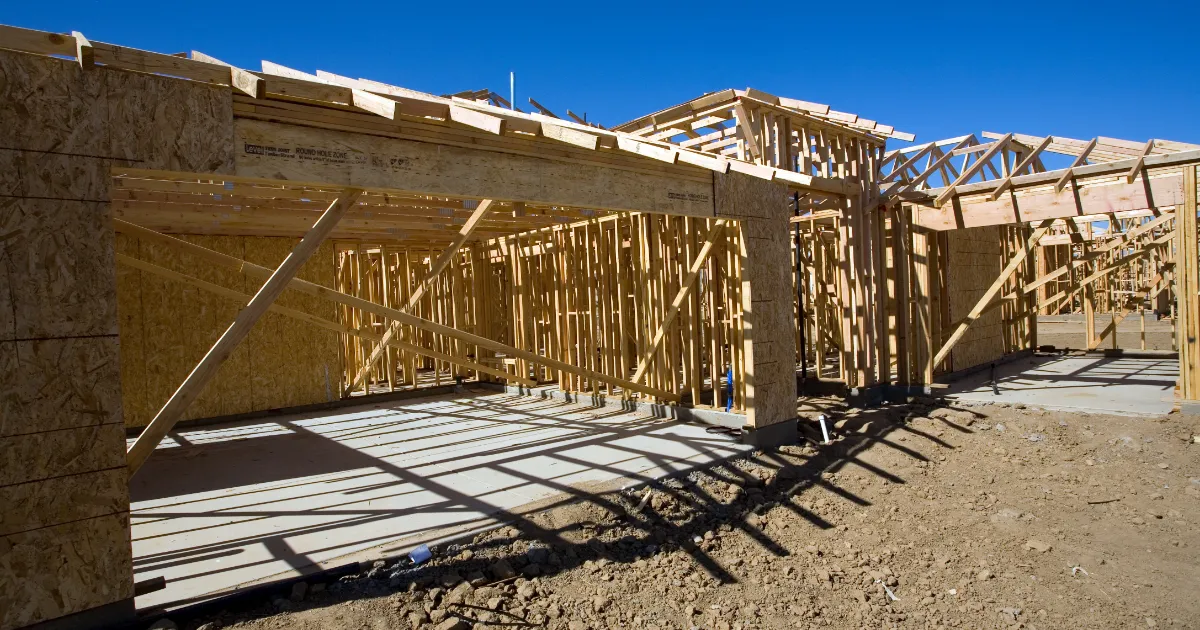
Wet framing: don't panic. Read this!
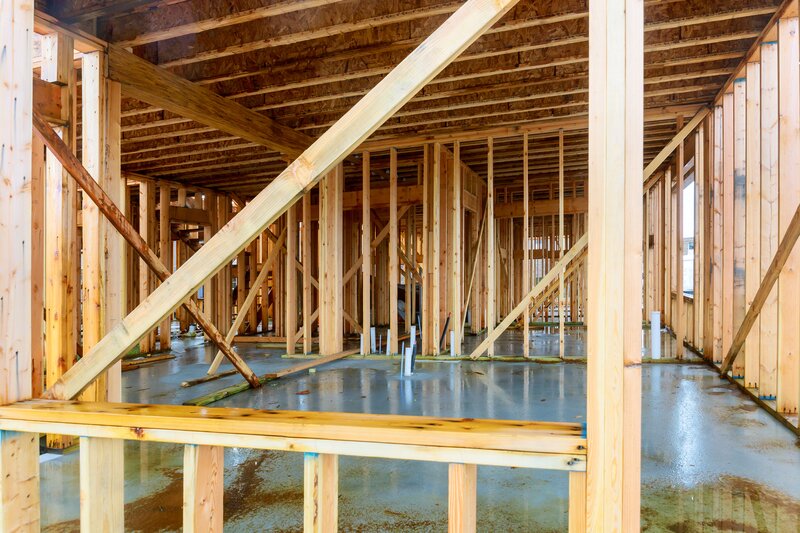
Seeing a wet frame and subfloor is frustrating for most homeowners. It is not satisfying to see construction penetrating with all that water, but the good news is that it doesn't mean your homebuilder will have to redo it or your move-in date will be postponed.
Everything will be fine
Before we begin, I want to calm down homeowners. Wet lumber will dry out without causing any significant issues. But sometimes I suggest addressing this issue with your homebuilder. Let's read what's okay and what's not.
Why can framing and subfloor become wet?
In most cases, framing and subfloor become wet during construction due to weather because the structure may not be fully enclosed yet. But sometimes, when there are heavy storms and hurricanes, your construction can become wet even if the roof is up and everything is sealed.
You have to keep in mind that once the framing starts, your homebuilder's priority number one is to get everything under the roof.
How do you know if the construction is too wet?
Standing water on a construction site is a big no-no. By standing water, I mean when there is a clear sky and the next day you still see standing water. In such cases, ask your homebuilder to remove all the standing water.
The next thing you can do is ask your homebuilder to measure moisture inside the wood. A moisture meter is a small device that you can also buy yourself. Everything above 18% is too much, and the construction must be dried. You should aim for 12-14%, ideally 12% and below.
These are four possible ways to dry wet lumber
Give it time
Let your construction dry out. As long as you have sufficient ventilation, it will dry out. This is also the reason why most homebuilders don't rush with insulation. They finish the roof and then allow the construction to dry in case the weather is rainy.
Air movement
If the construction is already sealed and windows have been installed, then I would suggest bringing in air blowers and fans. This is a relatively cheap and quick solution to reduce moisture. Air flow increases the speed of drying.
Dehumidifier
A dehumidifier is a good option because it allows you to control moisture inside the building. Dehumidifiers should be used once everything is sealed and the windows are closed.
Heating up the air
Heaters are used mainly in cases when the outside temperature is below or close to freezing. Dehumidifiers or air blowers will not work if everything is frozen.
Check and control moisture levels
If you find out that your lumber is too wet, then you should ask your homebuilder to control the moisture level. Usually, homebuilders will make notes on lumber with a marker of moisture level, and then recheck and update that measurement after a couple of days. This will indicate how quickly the construction is drying.
Extra advice tip
I always recommend homeowners ask their homebuilders to clean the subfloor after every shift. Wet and standing wooden particles usually dry out very slowly, creating perfect conditions for mold.