Where Your Square Footage Is Secretly Wasted (And What to Build Instead)
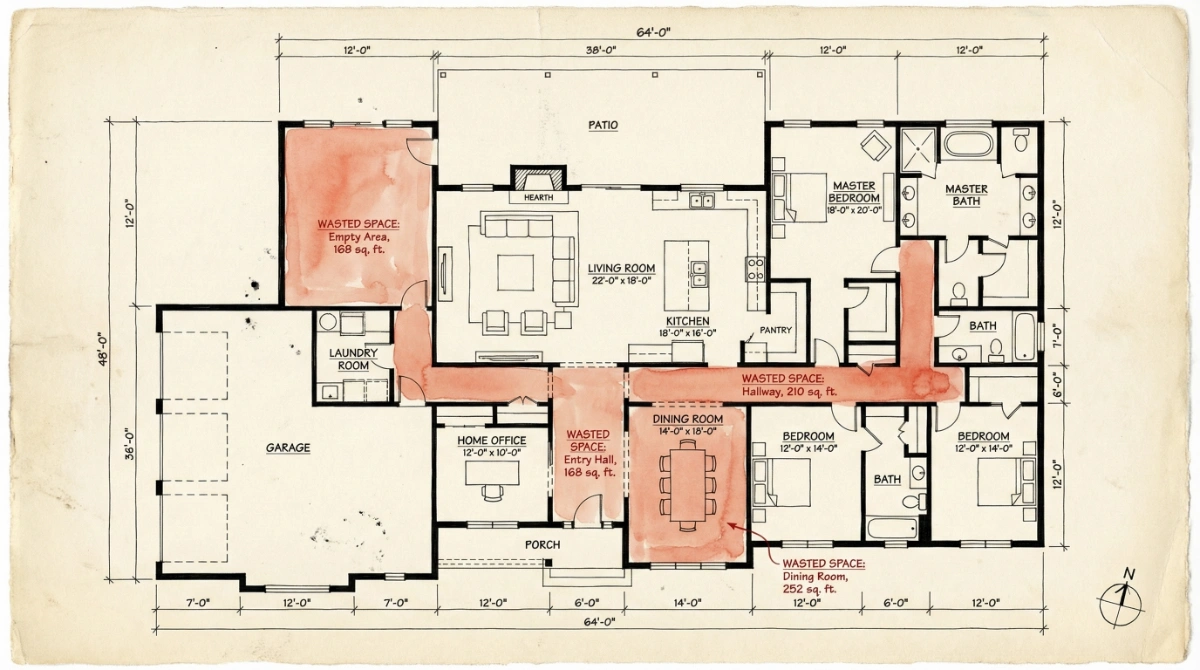
Your architect won’t tell you this, but half your square footage is wasted.
Not literally 50%. But way more than you think.
After 15+ years in this industry, I can walk into almost any custom home and find 20-30% of space that adds cost but zero quality of life. Space you’re heating. Cooling. Paying a mortgage on. Cleaning. And barely using.
This isn’t a shot at architects. Most are designing exactly what clients ask for. Bigger. More rooms. More “wow.” But nobody asks the question that changes everything:
“How much of this space will I actually USE daily?”
is rarely or never used
per sq ft you’re wasting
eliminating dead space
Let me show you where the waste is hiding.
The 6 Biggest Space Wasters in Custom Homes
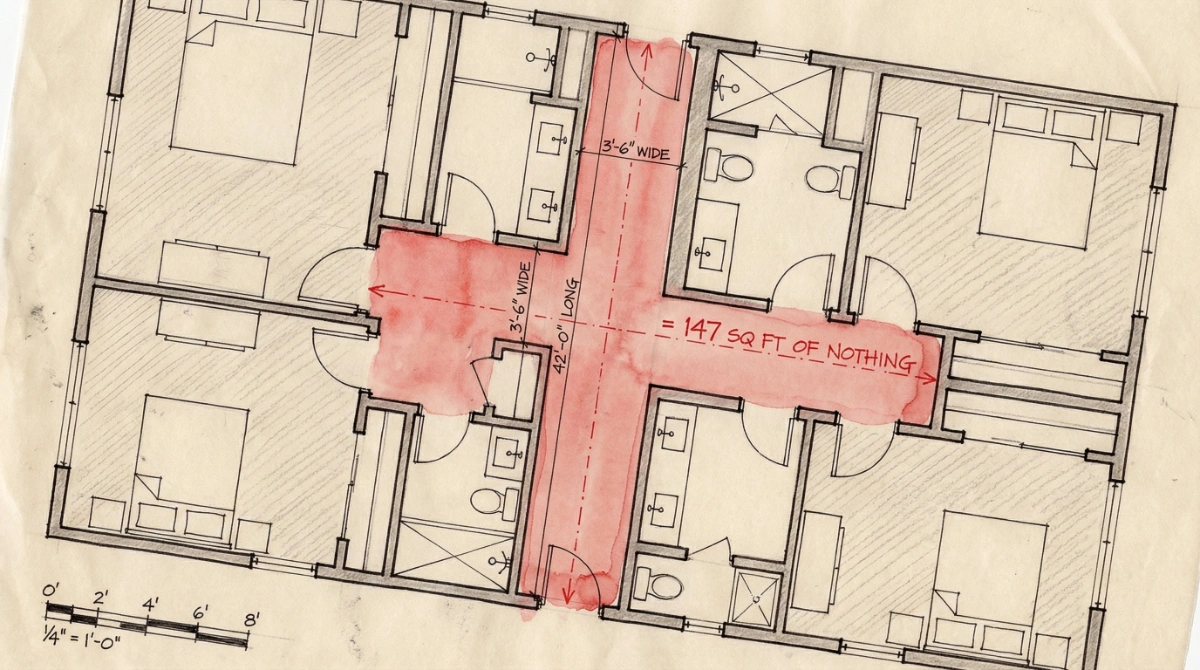
Most homes waste 8-12% of total area on hallways. In a 3,000 sq ft home, that’s 240-360 sq ft of nothing.
That’s a full bedroom worth of space you’re heating, cooling, and paying mortgage on - just to walk through.
| Metric | Typical Home | Smart Design |
|---|---|---|
| Hallway % of total area | 8-12% | 2-4% |
| In a 3,000 sq ft home | 240-360 sq ft wasted | 60-120 sq ft (necessary transitions only) |
| Build cost at $150/sqft | $36,000-$54,000 | $9,000-$18,000 |
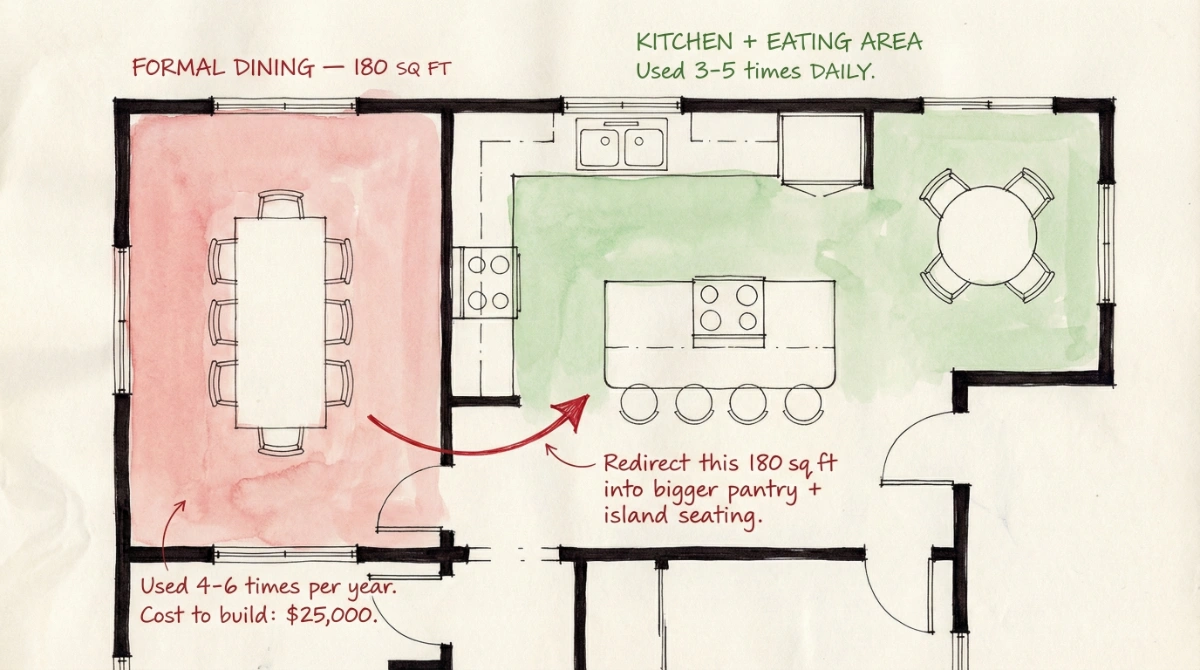
I need to say it.
- Average use: 4-6 times per year (holidays + maybe a dinner party)
- Average size: 150-200 sq ft
- Average cost to build: $15,000-$25,000
- What it actually becomes: homework table, mail dump, cat’s favorite room
You’re paying $25,000 for a room your cat uses more than you do.
The formal dining room is a holdover from a different era. An era when people entertained differently, when homes were designed to impress visitors, and when “keeping up with the Joneses” meant having a room you never sat in. That era is over.
Designing Your Floor Plan? Don’t Pay for Space You Won’t Use.
The Home Building Checklist covers every design decision - room sizes, layout flow, storage planning, and the questions to ask your architect before you finalize. Phase by phase. Decision by decision.
See the Complete Checklist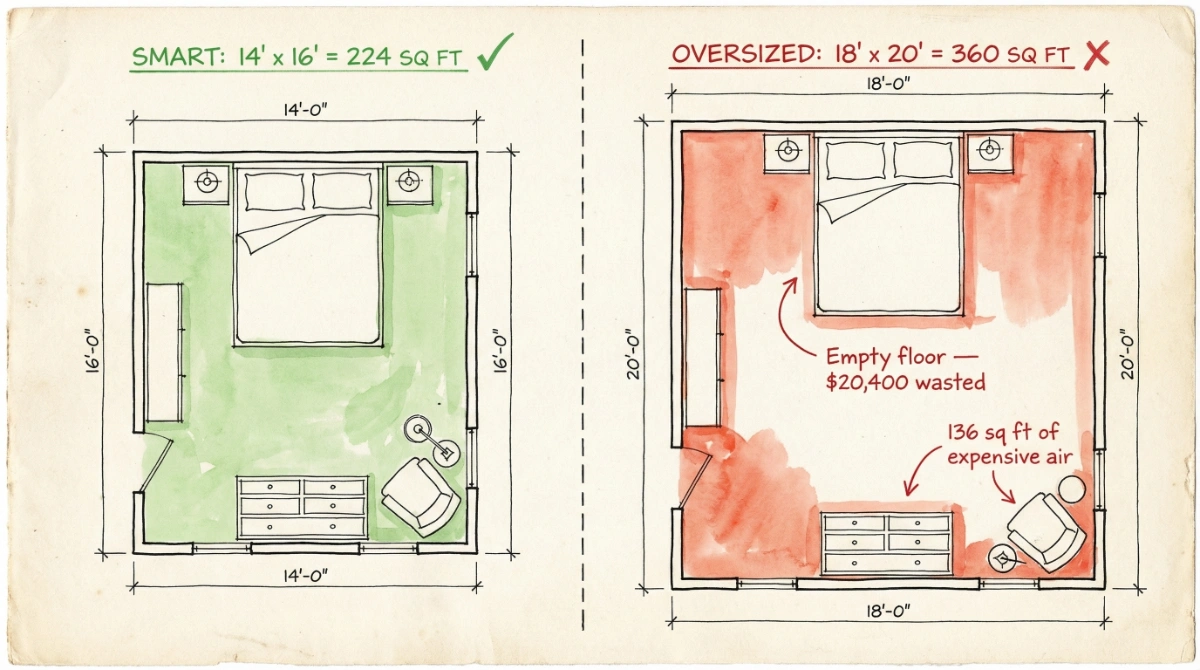
Controversial? Maybe. True? Absolutely.
- Most master bedrooms are 200-300 sq ft
- What’s actually IN them? A bed. Two nightstands. Maybe a dresser.
- You are unconscious for 90% of the time you spend in this room
- That extra 80+ sq ft beyond what you need? Dead space with expensive flooring
Oversized Master
18×20 = 360 sq ft
Cost: ~$54,000
Contains: bed, nightstands, air
Feels: echoey, empty
Right-Sized Master
14×16 = 224 sq ft
Cost: ~$33,600
Contains: bed, nightstands, cozy
Savings: $20,400 -> upgrade closet
A 14×16 master bedroom is perfect for a king bed, two nightstands, and a dresser. It feels proportional, cozy, and intentional. Anything beyond that is paying for air.
The great room with 20-foot ceilings looks incredible. Magazine-worthy. Jaw-dropping.
Here’s what nobody mentions:
- You just deleted an entire room’s worth of usable second floor
- Heating that volume costs 30-40% more than a standard-height room
- Changing a lightbulb requires scaffolding or a 16-foot ladder
- That upper wall space? Collects dust. That’s literally all it does.
- Sound echoes like a gymnasium - conversations bounce, TV audio is muddy
| Ceiling Height | Drama Level | Lost Space | Energy Cost Impact |
|---|---|---|---|
| 9 ft (standard) | Normal | 0 sq ft | Baseline |
| 12 ft (elevated) | Noticeable | 0 sq ft | +10-15% |
| 16 ft (vaulted) | Impressive | ~150 sq ft second floor | +20-30% |
| 20 ft (double-height) | Magazine-worthy | ~300 sq ft second floor | +30-40% |
I see this constantly. Five-bedroom homes with 5.5 bathrooms.
When I ask “who uses the fourth guest bath?” the answer is always some variation of: “well... when we have company... sometimes...”
- Each full bathroom costs $10,000-$20,000 to build
- That 4th guest bath gets used maybe 10 times per year
- More bathrooms = more plumbing maintenance forever
- More surfaces to clean, more fixtures to replace, more things to leak
- Every extra bathroom is 40-60 sq ft that could have been something else
Two full bathrooms + a powder room handles 90% of families perfectly. If you have a dedicated guest suite, add a third full bath. Beyond that, you’re paying for plumbing that sits idle 350 days a year.
“We’ll figure out what to do with it later.”
No. You won’t.
- Unnamed rooms become storage rooms. Every single time.
- 300 sq ft of “bonus room” = $30,000-$45,000 in build cost sitting empty
- If you can’t name what happens in the room - you don’t need the room
- Within 2 years, it will contain: exercise equipment nobody uses, Amazon boxes, and a broken printer
Every room in your house should have a job on day one. Not “someday.” Not “eventually.” Day one. If you can’t describe what will happen in that room every week, you don’t need it.
So Where SHOULD That Square Footage Go?
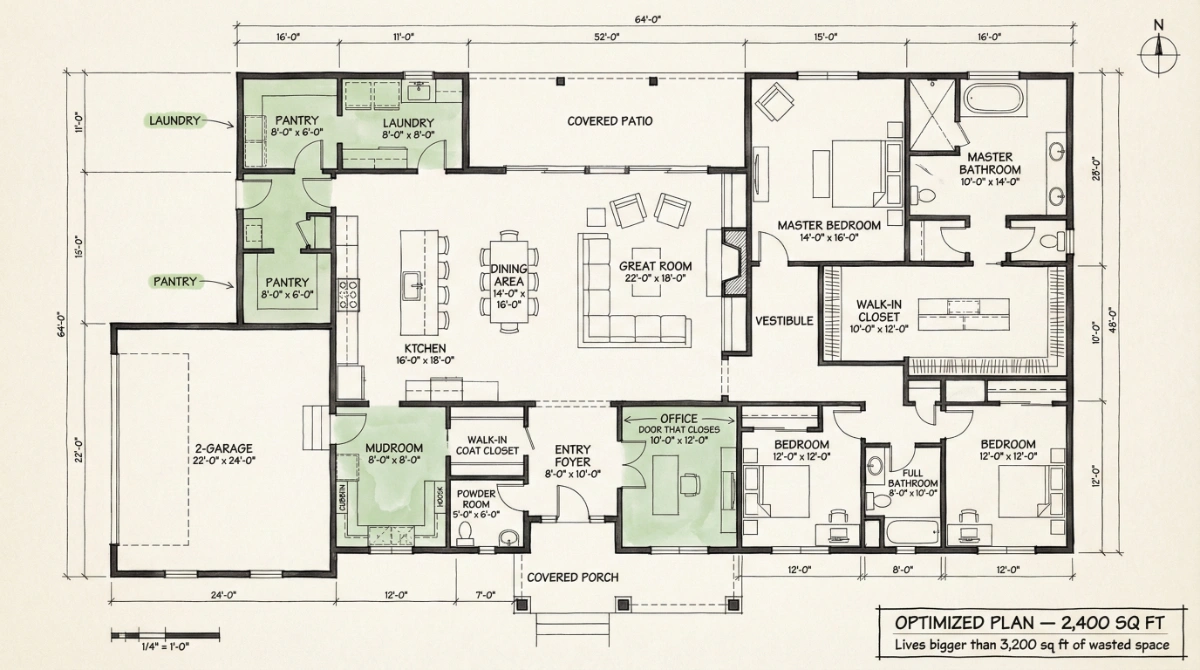
Take all that wasted hallway, that formal dining room, that oversized master, those extra bathrooms, and that bonus room - and redirect it into the spaces you’ll use every single day.
| Instead of This... | Build This | Why It’s Better |
|---|---|---|
| 200 sq ft hallways | Bigger pantry (the most underbuilt room in America) | Used multiple times daily. Reduces kitchen counter clutter. Pays for itself in organization. |
| Formal dining room | Larger laundry room with folding counter & storage | You do laundry 300+ times/year. You host formal dinners 4-6 times. |
| Oversized master bedroom | Walk-in closet with island & built-ins | You’re awake in your closet. You’re asleep in your bedroom. Invest in awake space. |
| Double-height great room | Home office with a door that closes | Remote work is permanent. A real office with real walls = real productivity. |
| 4th guest bathroom | Proper mudroom that fits your family’s actual life | Shoes, coats, backpacks, dog leashes - all contained. Front entry stays clean. |
| Unnamed bonus room | Wider doorways & hallways for aging in place | 36” doors and 42” hallways cost almost nothing extra and future-proof your home. |
Less “impressive” on a floor plan. 10x more useful every single day.
Plan Every Room. Question Every Square Foot.
The Home Building Checklist was built by someone who has walked through thousands of finished homes and seen which rooms get used - and which ones don’t. It covers layout decisions, room sizing, storage planning, and 200+ other decisions organized phase by phase.
Get the Home Building ChecklistThe Uncomfortable Math
Let’s put real numbers to it. At $150 per square foot (a moderate build in most US markets), here’s what that wasted space actually costs:
| Wasted Space | Sq Ft | Build Cost | 30-Year Mortgage Cost* |
|---|---|---|---|
| Excess hallways | 150 sq ft | $22,500 | $43,200 |
| Formal dining room | 175 sq ft | $26,250 | $50,400 |
| Oversized master (extra) | 100 sq ft | $15,000 | $28,800 |
| 4th bathroom | 50 sq ft | $15,000 | $28,800 |
| Unnamed bonus room | 250 sq ft | $37,500 | $72,000 |
| TOTAL WASTED | 725 sq ft | $116,250 | $223,200 |
*30-year mortgage at 7% interest approximately doubles the original build cost.
That’s over $200,000 in mortgage payments over the life of the loan - for space you don’t use. That number is not dramatic. It’s math.
space in a typical 3,000 sq ft home
that adds zero quality of life
over 30 years at 7%
The Bottom Line
A 2,400 sq ft home with zero wasted space lives bigger than a 3,200 sq ft home full of unused rooms.
Square footage is a vanity metric. Usable space is what you actually pay for - and live in.
Stop buying air. Start designing for YOUR daily life.
Every room should earn its place. Every square foot should serve a purpose. And every dollar you save by eliminating waste is a dollar you can redirect into the quality of what remains.
The best custom homes I’ve walked through in 15 years weren’t the biggest. They were the most intentional. Every room had a job. Every hallway was short. Every space was used daily - not “eventually.”
That’s not designing small. That’s designing smart.
Building a Home? Make Every Square Foot Count.
The Home Building Checklist covers layout decisions, room sizing, storage planning, and 200+ inspection points - organized phase by phase so you never waste money on space you won’t use. Built by a construction professional with 15+ years of experience.
Get the Home Building Checklist - $99For more on building smart, check out the hidden costs of building a custom home and 5 things contractors would never install in their own homes.